
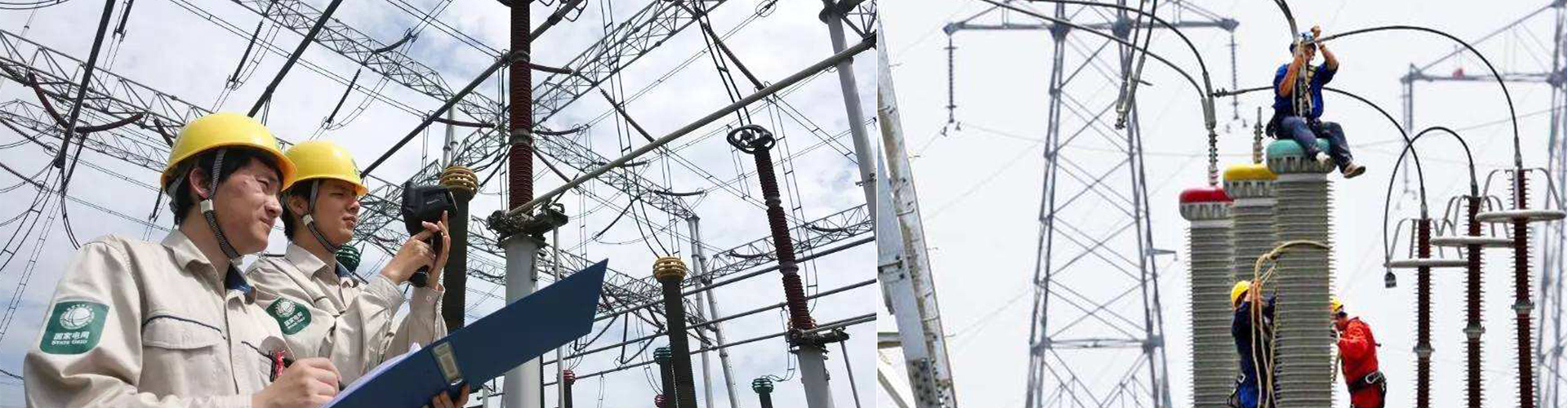
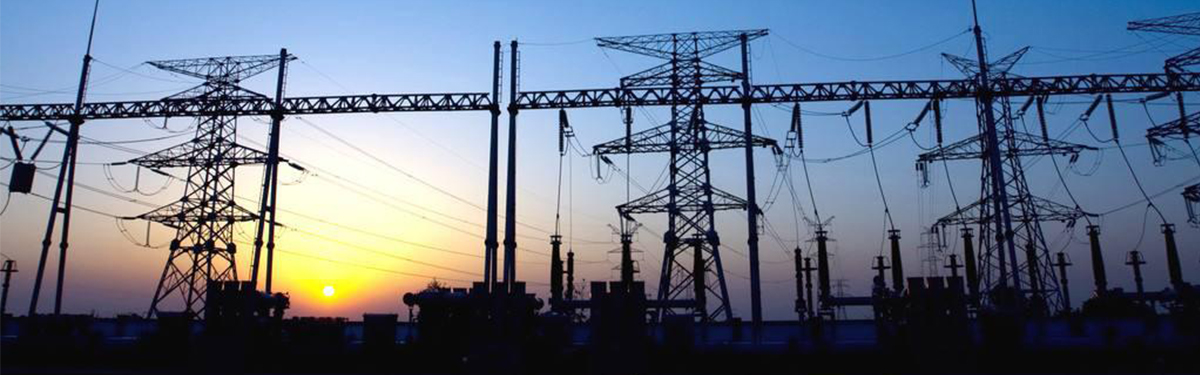
The professional name is usually Large Ground Grid Ground Resistance Tester or Heterodyne Large Ground Grid Test System
Large Ground Grid Tester, the professional name is usually Large Ground Grid Ground Resistance Tester or Heterodyne Large Ground Grid Test System. It is a specialized instrument designed for large grounding grids in power plants, substations, high-voltage transmission towers, etc. Unlike ordinary hand-cranked or digital ground resistance meters (such as those used for measuring household grounding), it can overcome the challenges of large ground grids, such as high capacitance, strong interference, and high test current requirements, and accurately measure key safety indicators such as grounding impedance, touch voltage, and step voltage. The following is an in-depth analysis based on the 2025-2026 power industry standards: 1. Why can't ordinary instruments measure "large ground grids"? Capacitance effect: Large ground grids have a large area (thousands to tens of thousands of square meters) and extremely high capacitance to ground. At power frequency (50Hz), the capacitive reactance is very small, and the small current of ordinary instruments cannot accurately separate the resistance component, leading to large measurement errors or even inability to read. Strong interference: There is extremely strong 50Hz power frequency electromagnetic interference in substations, which ordinary instruments cannot filter out, causing data to fluctuate violently. Current requirement: According to standards, testing large ground grids requires injecting a relatively large current (usually 1A-10A or even higher) to simulate the actual current dispersion under fault conditions. Ordinary instruments only output mA-level current, which cannot reflect real operating conditions. 2. Core technical principle: Heterodyne method + frequency-selective filtering Modern large ground grid testers use heterodyne sine wave technology: Heterodyne output: The output frequency is not 50Hz, but 45Hz/55Hz, 47.5Hz/52.5Hz, or other specific non-power-frequency frequencies. This perfectly avoids the strong 50Hz interference on site. Frequency-selective filtering: The receiving end uses a high-precision DSP digital filter to extract only the signal with the same frequency as the output, completely filtering out power frequency interference and harmonics, ensuring stable data even in strong electromagnetic environments. Large current injection: The output current can reach 1A - 20A (or even higher), effectively breaking through soil contact resistance and simulating grounding characteristics under real short-circuit currents. 3. Core test functions (not just resistance measurement) A complete large ground grid test system usually includes a host, current transformer, isolation transformer, and auxiliary electrodes, and can perform the following full set of safety tests: Grounding impedance (
