
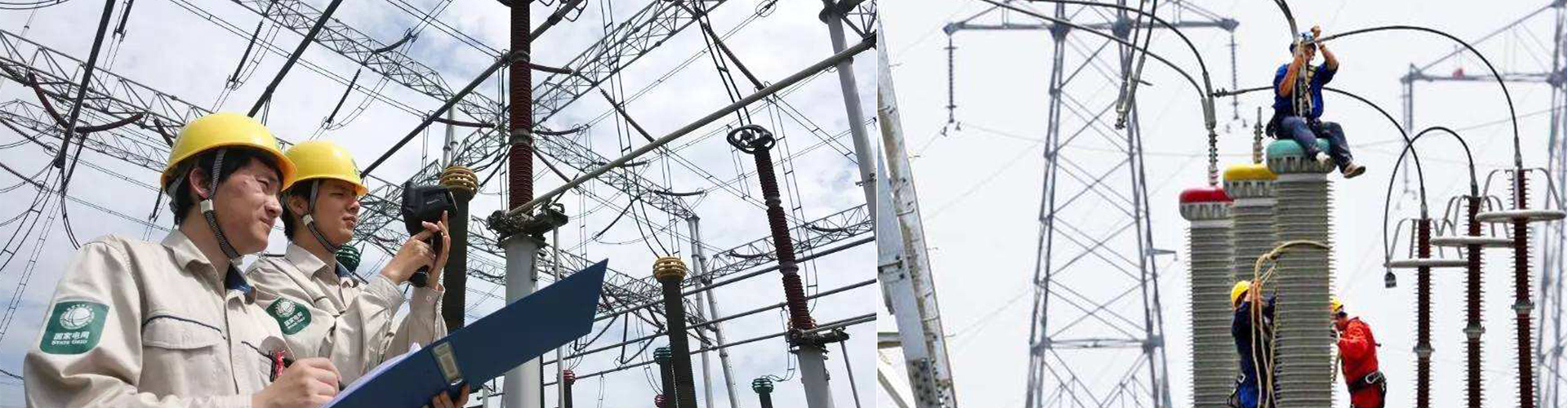
is an instrument used to measure the resistance value of insulating materials in electrical equipment and circuits. It is crucial for ensuring the safe operation of power systems, preventing electrical faults, and maintaining the reliability of electrical equipment. The following is a detailed introduction to the insulation resistance tester, including its working principle, uses, usage methods, and precautions.
Preventive maintenance: By regularly checking the insulation condition of electrical equipment, potential problems such as aging, moisture, or damaged insulation materials can be detected early, allowing measures to be taken to avoid failures.
Fault diagnosis: When problems occur in the electrical system, insulation resistance testing can help locate the fault point and determine whether it is caused by insulation failure.
Installation acceptance: Newly installed electrical equipment must undergo insulation resistance testing before being put into use to ensure it meets the insulation standards specified by the manufacturer.
2. Working Principle
The operation of the insulation resistance tester is based on Ohm's law R = frac{V}{I}R=
where RR is the resistance, is the applied DC voltage,
and II is the current flowing through. During the test, the tester applies a specific DC voltage to the object under test and measures the resulting leakage current, thereby calculating the insulation resistance value.
Modern insulation resistance testers typically have the following features:
Automatic test voltage selection: Automatically adjusts the most suitable test voltage based on the type of object under test.
Data storage and analysis: Can record test data and support long-term trend analysis.
Graphical display: Provides an intuitive LCD screen display for users to easily view test results.
3. Test Voltage Levels
Different electrical equipment and application scenarios require different levels of test voltage. For example:
Low-voltage equipment (such as household appliances): Generally uses a test voltage of 500V DC.
Medium-voltage equipment (such as motors, generators): May require 1000V DC or higher.
High-voltage equipment (such as transmission lines, transformers): May require test voltages up to 5000V DC or even higher.
4. Usage Precautions
Safety: Ensure that all power sources are cut off before testing, and that energy storage components such as capacitors are fully discharged; wear appropriate personal protective equipment.
Environmental conditions: Factors such as humidity and temperature can affect test results. Try to maintain a stable test environment and consider the impact of these factors.
Cleanliness: Ensure that test points are clean and free of dust, as dirt or moisture may cause inaccurate readings.
5. Maintenance and Calibration
To ensure the accuracy of test results, insulation resistance testers should be calibrated regularly. Daily maintenance also includes keeping the equipment clean and properly storing and transporting the equipment according to the manufacturer's instructions.
6. Technology Development Trends
With technological advancements, modern insulation resistance testers are not limited to basic resistance measurement functions but also integrate more advanced features such as wireless transmission, remote monitoring, and intelligent diagnostics, greatly improving work efficiency and user experience.
Conclusion
Insulation resistance testing is an important part of ensuring the safe and reliable operation of electrical systems. Choosing a suitable and high-quality insulation resistance tester and strictly following operating procedures plays an irreplaceable role in improving the safety of electrical equipment and extending its service life.
I hope the above information helps you understand the insulation resistance tester and its applications more comprehensively. If you have further questions or need information on specific models, please feel free to ask.

