
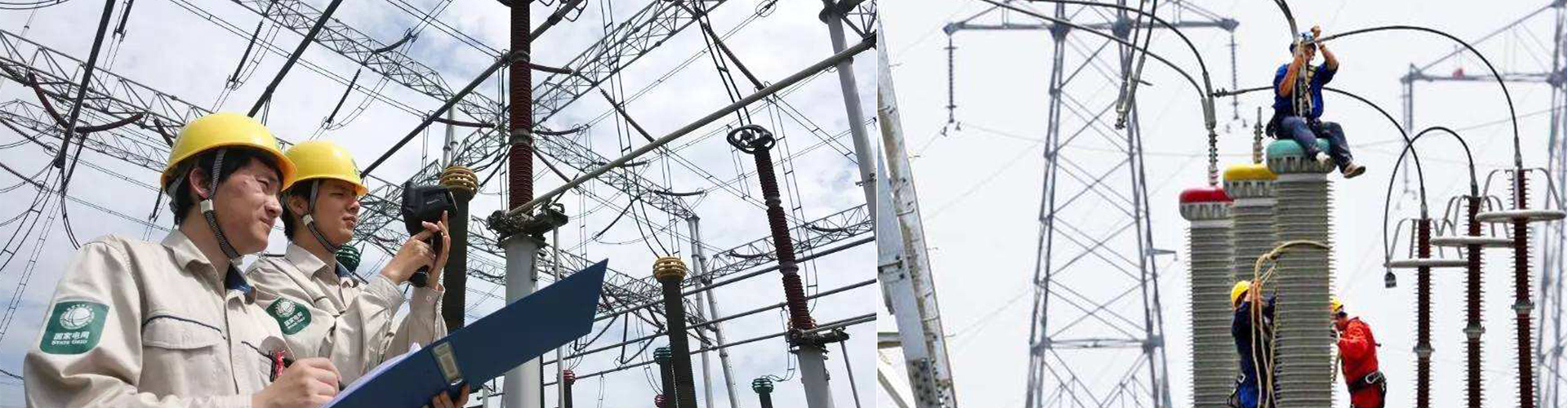
In power systems, industrial facilities, buildings, and other places, the grounding system is an important component for ensuring personnel safety and stable equipment operation. As a professional testing tool, the large ground grid tester can accurately measure the resistance, conductivity, and integrity of the grounding system, thereby ensuring the effectiveness of the grounding system. By regularly using the large ground grid tester for testing, potential problems can be discovered and repaired in a timely manner, improving the safety and reliability of the system.
What is a Large Ground Grid Tester?
A large ground grid tester is an instrument specifically designed to measure the resistance of large-area grounding systems (such as substations, large factories, high-rise buildings, and other ground grids). It can evaluate the conductivity of the ground grid, ensuring that in the event of power faults or lightning strikes, current can be quickly discharged to the earth, protecting the safety of personnel and equipment.
Working Principle
The working principle of the large ground grid tester is based on the four-terminal method (Kelvin four-terminal method) or the three-terminal method. It calculates the ground resistance by applying a known current and measuring the voltage drop through independent voltage probes. The specific steps are as follows:
Current Injection: The tester injects current into the ground through a current probe.
Voltage Measurement: The voltage drop between the current probe and the grounding system is measured through two voltage probes.
Resistance Calculation: According to Ohm's law
, the ground resistance value is calculated.
Main Functions and Features
High-Precision Measurement: Provides high-precision ground resistance measurement results, ensuring the accuracy of testing data.
Multifunctionality: In addition to measuring ground resistance, it also has functions such as measuring soil resistivity and step voltage.
Easy Operation: Adopts a graphical interface and intuitive operation process, making it convenient for technical personnel to use.
Data Recording and Analysis: Built-in data storage function supports data recording and later analysis, facilitating report generation.
Automatic Compensation: Has temperature compensation function, which can eliminate the influence of temperature changes on measurement results.
Application Scenarios
The large ground grid tester is widely used in various occasions, including but not limited to:
Power Systems: In power facilities such as substations and transmission lines, ensure the reliability of the grounding system.
Industrial Sites: In flammable and explosive environments such as chemical plants and refineries, ensure the effectiveness of equipment grounding systems.
Buildings: In facilities such as high-rise buildings and data centers, test and maintain grounding systems to ensure personnel safety.
Communication Base Stations: Ensure that the grounding system of communication equipment meets safety standards and prevent lightning damage.
Usage Precautions
When using the large ground grid tester, the following points should be noted:
Proper Probe Placement: According to testing requirements, reasonably arrange the positions of current and voltage probes to ensure accurate measurement results.
Safe Operation: Safety regulations should be followed during testing to prevent accidents such as electric shock.
Environmental Conditions: Pay attention to the humidity and soil conditions of the testing environment to avoid environmental factors affecting measurement results.
Regular Calibration: To ensure the measurement accuracy of the tester, it should be calibrated and maintained regularly.
Technology Development Trends
With the advancement of technology, the large ground grid tester is also continuously innovating and developing. Future testers will be more intelligent, integrating advanced signal processing technology and wireless communication functions to achieve remote monitoring and data analysis. In addition, through the application of artificial intelligence (AI) and big data analysis technology, testers will be able to provide more precise fault diagnosis and predictive maintenance recommendations.
Conclusion
The large ground grid tester, as an important tool for ensuring the safety and reliability of grounding systems, helps engineers and technical personnel discover and solve potential problems in a timely manner by accurately measuring and evaluating the performance of grounding systems, thereby improving the safety and reliability of the system. With the continuous advancement of technology, future large ground grid testers will be more efficient and intelligent, better serving the testing and maintenance of power systems and industrial facilities.
This article outlines the basic concept, working principle, and application of the large ground grid tester in power systems and industrial facilities. If you need more detailed information or have other specific needs, please feel free to let us know.

