
When purchasing a loop resistance tester, a practical question often arises: given equipment with current ranges of 100A, 200A, or even higher, how can one determine which model truly matches on-site requirements? Especially in low-resistance measurement scenarios such as switch contact resistance and busbar connection resistance, current output capability directly affects the reference value of measurement results.
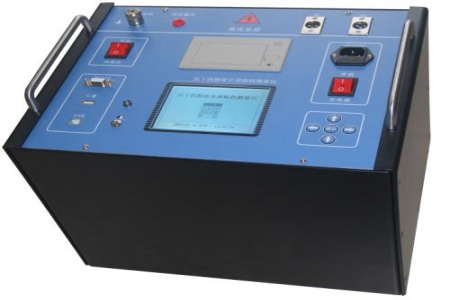
Common 100A loop resistance testers on the market are suitable for contact resistance measurement of most medium- and low-voltage switches. The YMD-200C provides a 200A range output; when measuring low-resistance (typically micro-ohm level) objects such as the main conductive circuit of high-voltage circuit breakers and large-cross-section busbar connections, a higher test current helps improve the signal-to-noise ratio and makes instrument readings more stable. For occasions requiring verification of circuit integrity according to higher standards, the 200A range offers a wider scope of application than 100A equipment, and procurement personnel can select according to the rated current of the tested object and the requirements of maintenance procedures.
Some 300A and above devices are larger in size and power consumption, placing higher demands on on-site power supply capacity. The YMD-200C has a total power of 1200W, balancing output capability and portability at the 200A output range, making it suitable for conventional power supply conditions such as substation maintenance sites and switchgear production workshops. Compared with equipment of higher current levels, while ensuring low-resistance measurement requirements, it reduces the burden on on-site distribution lines, making it easier for procurement personnel to strike a balance among equipment weight, power supply adaptation, and testing needs.
The device is suitable for low-resistance measurement scenarios such as high-voltage switch contact resistance, disconnector contact resistance, and busbar connection resistance, with an output current range of 200A, meeting the requirements for loop resistance testing in power preventive tests and handover tests. When selecting, procurement personnel can comprehensively evaluate based on the loop resistance range of the tested object, on-site power supply conditions, and the test current requirements of maintenance procedures. Specific technical parameters of the equipment are subject to the accompanying technical documents.

