

During design and selection, a common question arises: for a circuit breaker with a rated current of 600A, should the on-site test current be 100A or 200A? The following Q&A starts from actual needs to help selection personnel clarify their thinking.
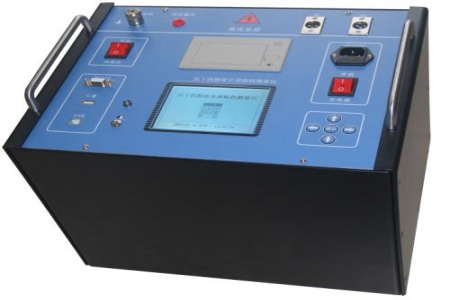
Common output currents for loop resistance testers include 100A, 200A, etc. The selection basis mainly depends on the rated current of the switch under test and the loop resistance range. For switches with a rated current of 630A and below, a 100A test current usually meets the requirements; for switches with a rated current of 1250A and above, it is recommended to choose a model with 200A or higher current. The KDR-200S outputs a 200A DC test current, which can cover the contact resistance measurement needs of most medium- and high-voltage switches.
The KDR-200S output voltage can reach 10V, which is 2-3 times that of conventional instruments. During on-site testing, thinner test leads can also ensure sufficient current output, reducing the burden on test personnel of carrying heavy cables.
The KDR-200S has a measurement range of 0-1999μΩ and a resolution of 1μΩ. It adopts a four-wire measurement method, which can effectively eliminate the influence of lead resistance and contact resistance, making it suitable for low-resistance measurements such as switch contact resistance and busbar connection resistance.
This instrument is suitable for measuring the loop resistance and contact resistance of high-voltage circuit breakers, disconnectors, busbar joints, and other equipment. It can also be used for power maintenance, preventive testing, and acceptance testing after equipment installation. During design and selection, if multiple switch types need to be accommodated, the 200A range can be given priority to improve instrument utilization.

