

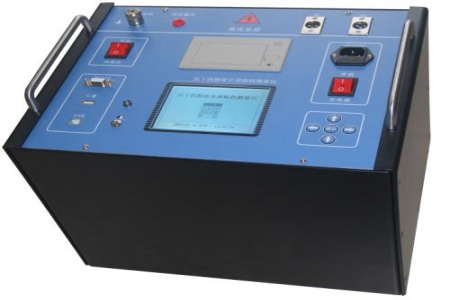
When installed outdoors at northern substations in winter, an online transformer oil chromatography monitoring device faces the challenges of low temperature, temperature differences, and condensation. The GP-9581 has a working environment temperature lower limit of -40°C and an upper limit of +55°C, a relative humidity adaptation range of 5%–95%, and an atmospheric pressure range of 70 kPa–110 kPa. The device adopts internal anti-condensation and anti-icing measures to keep the gas path and oil path unobstructed during low-temperature startup and continuous operation, making it suitable for long-term outdoor monitoring scenarios in winter.
During the selection stage, procurement personnel can focus on the following parameters: monitored components include characteristic gases such as hydrogen, carbon monoxide, carbon dioxide, methane, ethane, ethylene, and acetylene; the oil circulation flow rate is stable and adjustable to ensure consistency in degassing and chromatographic separation; carrier gas remaining amount and cold trap temperature have local display and remote transmission functions; the communication interface supports in-station protocol access for centralized monitoring. The device structure takes into account protection and maintenance space for outdoor installation, with clear daily inspection items, reducing the threshold for operation and maintenance.
After commissioning, daily recording of carrier gas remaining amount, cold trap temperature, oil circulation flow rate, and communication status can promptly reveal insufficient gas supply, abnormal temperature control, or data interruption. The device operates within the range of -40°C to +55°C, with no internal condensation or icing, and no additional heating or insulation measures are required during inspections. For devices installed in outdoor scenarios in northern winters, it is recommended to check operation logs against local extreme temperature records to confirm data continuity during low-temperature periods.
The device is suitable for online monitoring of dissolved gases in oil for transformers of 110 kV and above, and can be installed in the outdoor equipment area of a substation, connected to the oil sampling port of the main transformer body. During installation, pay attention to the oil path routing and antifreeze requirements, and lay communication cables according to in-station specifications. For occasions requiring consideration of both winter low temperatures and summer high temperatures, the device's temperature adaptation range can cover most outdoor environmental conditions. During procurement, the interface matching can be confirmed in combination with in-station communication protocols and backend system requirements.

