

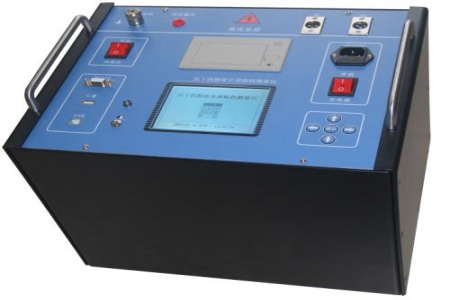
For an oil chromatography online monitoring device installed on site, what operations and maintenance personnel care about most is often not the principle, but "how do I use it after it is installed, and where should I check first if a problem occurs." The following explains common on-site questions one by one.
The GP-9571 has an operating ambient temperature range of -40°C to +55°C and a relative humidity range of 5% to 95%. There is no condensation or icing inside the device, and it adapts to atmospheric pressure from 70 kPa to 110 kPa. When installed in outdoor cabinets at northern substations, low-temperature startup and continuous operation are scenarios specifically considered in the design. Operations and maintenance personnel only need to confirm the cabinet sealing and heating status according to the manual.
The device uses photoacoustic spectroscopy to detect dissolved gases in oil and can perform online analysis of components such as acetylene, hydrogen, carbon monoxide, ethylene, methane, ethane, and carbon dioxide and provide variation trends. During inspections, focus on the appearance of acetylene and the growth rates of hydrogen and total hydrocarbons, and use historical curves to determine whether continuous gas generation exists, rather than looking only at a single measurement value.
The sampling and oil return procedures follow the approach of GB7597-1987 Methods for sampling electric power oils. Oil circuit interfaces should be kept clean and residual air should be avoided. The device is powered by AC220V. Operations and maintenance personnel should periodically check the sealing performance of the oil circuit and leakage at joints according to DL/T 596-1996 preventive test procedures. Moisture indicators can be compared by referring to GB/T7601-1987 Method for determination of water content in transformer oil in service, and maintenance requirements should follow the relevant provisions of GB/T14542-93.
First check whether the oil sampling valve opening and oil circulation are normal, then check the status of carrier gas and calibration gas and whether the sensor has been calibrated. After confirming that the device itself is not at fault, cross-compare with laboratory chromatography data from power-off preventive tests to avoid misjudging equipment status due to device-side factors.
It should preferably be arranged near the oil sampling port of the transformer body to shorten the oil circuit length and reduce lag. The cabinet should be well ventilated, avoid being immediately adjacent to strong electromagnetic interference sources, and leave space for maintenance and sampling to facilitate on-site operation by operations and maintenance personnel.

