
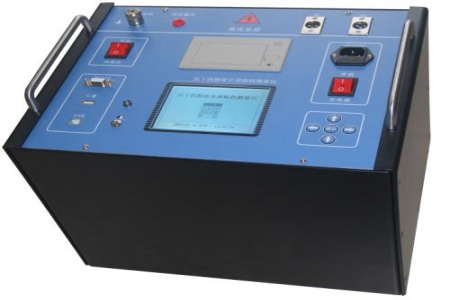
During the design and selection stage, feedback such as the following is often received: after an online monitoring device is put into operation, the background data does not match the laboratory offline chromatography data, or abnormal jumps in component concentration occur during load fluctuations. Such phenomena are mostly related to the matching of sensor principles, degassing methods, and data correction strategies. The following provides an objective explanation of several key issues regarding online transformer oil chromatography monitoring devices from the perspective of selection and design.
During selection, both the measurement range and the minimum detection limit need to be considered. The measurement range of the device for components such as hydrogen, carbon monoxide, methane, ethylene, and acetylene typically covers 0–1000 ppm (some components can be extended to a higher range), and the detection limit for characteristic components such as acetylene is recommended to be no higher than 0.5 ppm. For early latent faults that may occur during operation, the detection limit indicator is more informative than the upper range limit. Design and selection personnel should combine the transformer voltage level, oil volume, and historical gas production rate to confirm whether the device's resolution capability in the low-concentration range meets early warning requirements.
The degassing efficiency of dissolved gases in oil directly affects measurement repeatability. Common methods include vacuum degassing, membrane permeation degassing, and carrier gas purge degassing. Vacuum degassing provides relatively sufficient recovery of low-solubility gases and is suitable for scenarios with high requirements for acetylene and hydrogen; membrane permeation methods have a relatively simple structure, but attention should be paid to the permeability attenuation of membrane components after long-term operation. During selection, the device can be required to provide verification data for degassing efficiency, and its calibration cycle and calibration method should be understood to evaluate the data consistency maintenance cost over the full life cycle.
Online monitoring and laboratory offline chromatography analysis belong to different measurement systems, and reasonable deviations are permissible. During selection communication, the device can be required to complete comparison testing with standard oil samples before leaving the factory, and the comparison conditions should be clarified. After commissioning, it is recommended to retain a regular offline sampling comparison mechanism; when deviations are large, priority should be given to investigating sampling representativeness, the degassing process, and sensor drift factors. The device should preferably have automatic calibration or manual calibration interfaces, making it convenient to incorporate into the operation and maintenance plan during design and selection.
The device typically provides communication methods such as RS485, Ethernet, and 4G, and supports protocols such as Modbus and IEC 61850. During design and selection, the access protocol, point table specifications, and data upload cycle of the station monitoring system need to be clarified. For scenarios requiring access to a centralized monitoring platform, it should be confirmed whether the device supports breakpoint resume and local data caching to avoid data loss caused by communication interruptions. At the same time, attention should be paid to the matching of the device's operating power supply with the station's DC system, as well as whether the electromagnetic compatibility indicators meet the requirements of the substation site environment.

