

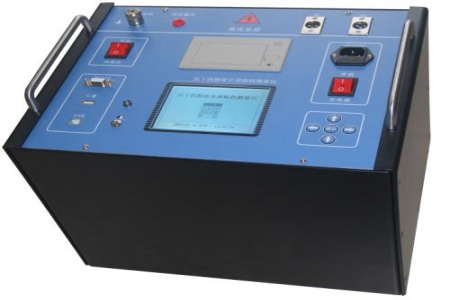
During routine inspections, substation operation and maintenance personnel need to promptly understand the changing trends of dissolved gases in transformer oil. Traditional manual sampling and laboratory testing have problems such as long cycles and delayed data, making it difficult to issue early warnings of incipient defects. The ZY-8000 online transformer oil chromatography monitoring device is designed for on-site operation and maintenance scenarios. It can continuously collect oil samples and analyze gas components, helping operation and maintenance personnel understand equipment status.
The device consists of an oil sample collection unit, a gas separation unit, a detection unit, and a data processing unit. The oil sample is introduced through the collection unit, and the dissolved gases are extracted from the oil through the gas separation unit. The detection unit measures components such as hydrogen, carbon monoxide, carbon dioxide, methane, ethylene, ethane, and acetylene. The data processing unit compares the measurement results with set limits and generates trend data for operation and maintenance personnel to view.
Measured components: hydrogen, carbon monoxide, carbon dioxide, methane, ethylene, ethane, acetylene; measurement range: acetylene 0–1000 μL/L, ethylene 0–2000 μL/L, hydrogen 0–5000 μL/L, other components determined according to configuration; detection repeatability: no greater than 5% (full scale); analysis cycle: can be set from 1 hour to 24 hours; communication interfaces: RS485, Ethernet, supporting common protocols; power supply: AC 220V±10%, 50Hz; operating ambient temperature: -20℃ to +55℃; protection rating: IP54.
The device is suitable for online monitoring of oil-immersed transformers, reactors, and other equipment at voltage levels of 110kV and above. During on-site installation, attention should be paid to the location of the oil sampling port, the sealing performance of the oil circuit, and communication wiring. Operation and maintenance personnel can view the concentration curves of each component through the background system and judge change trends based on historical data. When the concentration of a certain component approaches the set value, the device can issue a prompt to facilitate further inspection arrangements.
The device requires regular calibration with standard gas, and a calibration cycle of 6 to 12 months is recommended. The oil circuit system should avoid leakage and blockage, and the pressure of the carrier gas cylinder must be kept within the specified range. The operating data of the device should be compared with offline test results to confirm measurement consistency. For specific operations, please refer to the product manual.

