The operating characteristics of on-load tap-changers are directly related to the reliability of the transformer voltage regulation process and power quality. During on-site commissioning or maintenance, measuring transition resistance, transition time, and three-phase simultaneity is a fundamental means of assessing tap-changer condition. The following outlines several key points from the perspectives of model selection and practical use.
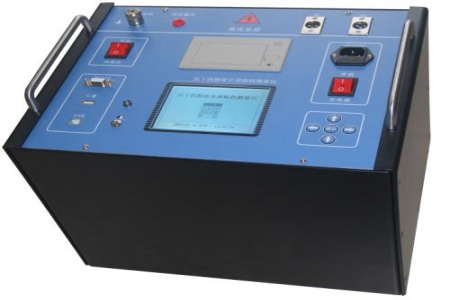
The transition resistance of conventional on-load tap-changers typically ranges from a few ohms to several tens of ohms. The HCR-5100 has a transition resistance measurement range of 0.1 Ω to 50 Ω, covering the common resistance value range. The transition resistance of each phase can be measured independently, making it easy for maintenance personnel to compare differences among the three phases and detect poor contact of contacts or abnormal resistance elements.
Three-phase simultaneity reflects the consistency of switching operations across phases, with a simultaneity measurement error of no more than 0.1 ms. The transition time measurement range is 0.1 ms to 500 ms, allowing recording of the time process from initiation to completion of switching. On-site comparison of historical data for tap-changers of the same model helps determine whether the mechanism shows signs of wear or sticking.
The sampling rate affects the ability to reproduce details of the transition process waveform. The HCR-5100 has a sampling rate of 10 kS/s, sufficient to record the transition resistance variation curve with adequate time resolution for analyzing abnormal jitter or discontinuities during switching. The signal channels use three-channel independent acquisition, supporting simultaneous connection of three phases and reducing the number of wiring changes required for phase-by-phase measurement.
The instrument can operate normally within 80% humidity, but when used outdoors it should be protected from rain and direct sunlight on the LCD screen. On-site maintenance personnel should operate it in a ventilated, dry environment; during prolonged outdoor work, sunshade and rain protection measures can be taken to ensure clear readings and instrument heat dissipation.
The prerequisite for comparative analysis is data comparability. Each measurement should record ambient temperature, tap-changer model, and previous maintenance data, facilitating horizontal comparison with equipment of the same model and longitudinal observation of trends for the same equipment. For phases with excessive transition resistance or out-of-limit simultaneity, further investigation of contact erosion or mechanism loosening can be conducted in conjunction with tap-changer maintenance records.

