
During routine maintenance of transformer on-load tap-changers, incomplete test waveforms or indistinct transition processes are sometimes encountered. This is not necessarily due to a defect in the tap-changer; it may be related to the oil film or oxide layer on the surface of the contact points. For newly commissioned tap-changers, the contact protective oil film may exhibit insulating properties at low voltage; for tap-changers that have been in service for many years, contact oxidation can also affect the test signal. When such phenomena occur, try adjusting the test current or performing multiple operations before testing again, which usually yields clearer waveforms.
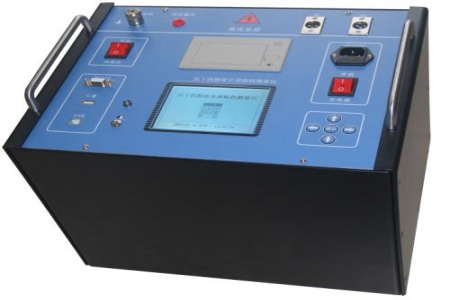
When selecting instruments for procurement, personnel should focus on confirming the transition resistance measurement range and test current ranges of the instrument. Tap-changers of different voltage levels vary considerably in transition resistance. If the actual resistance exceeds the instrument's range, the test current must be adjusted or a suitable range selected. The KT-6800 provides multiple test current ranges, with a transition resistance measurement range covering 0–20 Ω, meeting the testing needs of conventional transformer on-load tap-changers. The instrument also supports measurement of parameters such as transition time and three-phase simultaneity, facilitating judgment of tap-changer operating characteristics.
The KT-6800 can be used for routine maintenance, handover acceptance, and fault diagnosis of on-load tap-changers in power system transformers. At maintenance sites, the instrument can record transition waveforms during the switching process, helping technicians analyze contact operation sequence and transition resistance insertion. For factory tests by tap-changer manufacturers, the instrument can also serve as a supporting tool for verifying operating characteristics. The instrument is powered by a built-in battery, facilitating on-site mobile operation; test data can be stored and exported for subsequent comparison and analysis.
When waveforms are abnormal, external factors should be ruled out first. Check whether the test leads are securely connected and whether grounding is reliable. If the waveform is still unsatisfactory, appropriately increase the test current or perform multiple switching operations on the tap-changer to improve contact condition. For tap-changers that have not operated for a long time, it is recommended to perform several operating cycles before testing. The instrument's own calibration status should also be confirmed periodically to ensure the reference value of measurement results.

