

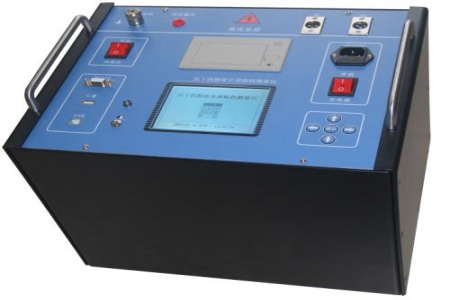
Maintenance crews often encounter the following situation during routine testing: the on-load tap-changer switching waveform shows spikes, and the calculated transition resistance does not match the nameplate value, yet it cannot be immediately determined on site whether the cause is switch contact wear or a test wiring problem. The DX-7300 On-Load Tap-Changer Tester is designed for such on-site diagnostic needs. It can record the transition waveform, transition time, and transition resistance during the switching process, allowing procurement personnel to evaluate it against actual maintenance workflows when selecting a model.
The transition time measurement range covers millisecond-level switching processes, and the measurement accuracy meets on-site comparison needs in the 1–5Ω transition resistance range. The instrument is powered by AC220V±10% and operates within an ambient temperature range of -10℃ to 50℃, making it suitable for use in substations or maintenance workshops. During procurement, the range should be checked against the voltage level of the tap-changer under test, the typical transition resistance value, and the switching time range to avoid waveform clipping caused by range mismatch.
Test clips are wearing parts. After each use, check the clip jaws for oxidation and spring tension, as poor contact will directly appear as an excessively high transition resistance reading. The instrument should be stored in a dry place for long periods and should not be left in high-humidity cable trenches or outdoor enclosures. If it is used in a low-temperature environment and then moved into a warm room, it is advisable to let it stand for a period before powering it on to reduce the risk of internal condensation. Wipe the display and key area with a slightly damp soft cloth, and do not use solvent-based cleaners.
Before testing, confirm that the tap-changer is in a de-energized maintenance state and reliably grounded. Follow the instrument instructions for wiring sequence to avoid interference caused by crossing voltage and current leads. Do not touch the test clips during switching, so that abnormal spikes in the waveform are not misjudged as switch defects. After testing, disconnect the instrument power before removing the leads, and record the ambient temperature and the number of switch operations for subsequent data comparison.
It is suitable for routine maintenance of transformer on-load tap-changers, retesting after abnormal switching waveforms, and handover inspection of newly commissioned tap-changers. For maintenance crews that frequently perform tap-changer characteristic measurements, it can be configured as a portable on-site testing tool. During procurement, it is recommended to also confirm that the test lead length matches the on-site switchgear layout.

