
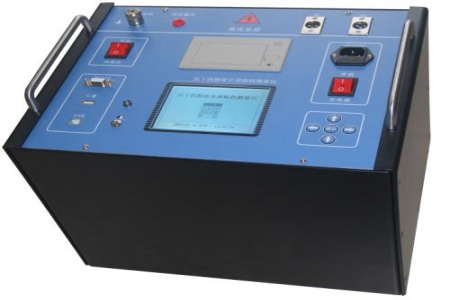
When purchasing vacuum degree testing equipment for substations or switch manufacturing workshops, procurement personnel usually face two types of solutions: one is traditional magnetron discharge method instruments, and the other is testers using new ionization technology. This article takes the KDZ-9 as an example to compare the actual performance of the two types of solutions in arc extinguishing chamber vacuum degree detection, for selection reference.
The traditional magnetron discharge method requires removing the arc extinguishing chamber or applying high voltage, the operation process is relatively complex, and the compatibility with some models of vacuum switches is limited. The KDZ-9 adopts an ionization charge collection method, can perform non-disassembly measurement on various models of vacuum switches, and its detection range covers 10⁻⁵ Pa to 10 Pa. For buyers, if there are many switch models to be tested daily, the one-machine-multi-use design can reduce repeated equipment purchases.
The instrument allows an ambient temperature of -20��~50℃ and air humidity ≤85%RH, suitable for most outdoor substations and workshop environments. The measurement resolution is 10⁻⁵ Pa, the reading is stable, and frequent calibration is not required. Compared with earlier solutions that required an external oscilloscope to observe waveforms, the KDZ-9 directly displays the vacuum degree value digitally, lowering the operation threshold.
Procurement personnel should confirm whether the equipment is accompanied by a calibration certificate, test leads, and a manual; at the same time, check the applicable range of arc extinguishing chamber pipe diameters to avoid affecting use due to mismatched fixtures. The KDZ-9 provides commonly used pipe diameter fixture interfaces, and users can choose according to actual switch models.
The instrument is powered by a built-in battery and does not require an external power supply on site. It is recommended to perform an accuracy check every six months and regularly inspect the insulation layer of the test leads. If a vacuum degree trend file needs to be established, an optional data export function can be selected for subsequent comparative analysis.

