
According to the requirements of DL/T 596 and GB 50150 for measurement error of conductive loop resistance, the voltage drop method commonly used on site is prone to introducing additional errors when the contact resistance of the current loop is relatively large. For operation and maintenance personnel, judging whether a DC resistance tester is suitable depends not on the number of panel functions, but on whether the current output mode can automatically adapt to the measured resistance and whether the range can cover all measurement points from the milliohm level to the ohm level.
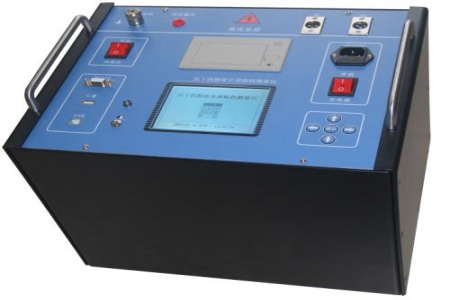
Traditional equipment relies on knobs or buttons to manually switch current ranges. When measuring large-cross-section busbars and circuit breaker contacts alternately, repeated trial measurements are needed to determine the range, and the consistency of measured values is affected by operating habits. HCR-100A adopts an automatic program-controlled current source. The current source has 1000 current ranges internally, which are automatically selected by the microcontroller according to the measured resistance, without manual range switching. The current throughout the measurement is provided by the same control logic, so multiple measurements at the same measurement point have better data comparability, and it is also convenient for operation and maintenance personnel to make horizontal comparisons between different sites.
The measurement range of the equipment covers the low-resistance section starting from 1mΩ, which can meet the contact resistance measurement of circuit breaker conductive loops, disconnector contacts, busbar joints and other parts; for loads with relatively higher resistance such as transformer windings, testing is also completed within the same range framework. The direct benefit of the wide range is that one device carried for one trip can cover most DC resistance measurement points in the station, reducing the need to temporarily change meters due to insufficient equipment range.
Conventional handheld micro-ohmmeters are more sensitive to lead contact when measuring small resistance values. Loose test line clamps or uncleaned oxide layers will be reflected as data jumps. The automatic current range adjustment logic of HCR-100A will automatically match the output state after connection. Operation and maintenance personnel only need to ensure that the voltage line and current line are clamped separately according to specifications to obtain stable readings. Compared with solutions requiring an external high-current source, the whole machine has higher integration, and the on-site wiring and handling workload are correspondingly reduced.
Before measurement, disconnect the power supply of the circuit under test and verify the absence of voltage, and remove the oxide layer on the contact surface; the voltage clamp should be clamped inside the current clamp to avoid including lead resistance in the result. After the test, discharge the equipment under test according to regulations. The equipment is suitable for scenarios such as substation maintenance, switchgear factory inspection, and busbar installation acceptance. Specific technical parameters are subject to the accompanying manual.

