

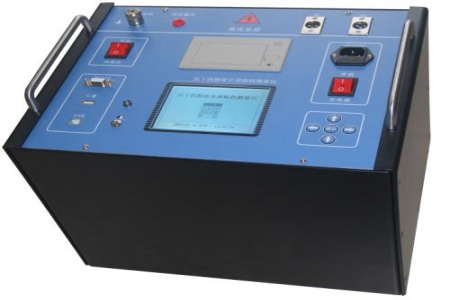
In the manufacturing and operation of power equipment, leak detection of insulating gases such as SF6 is an important part of ensuring the safe operation of equipment. Design and selection personnel often face a question: how can laboratory-level leak detection accuracy and on-site portability be balanced? The Q200 quantitative gas leak detector is designed for this need, adopting a portable structure that integrates the gas path, sensing, and display units into a carrying case, making it convenient to carry out quantitative detection in switch rooms, GIS bays, and outdoor equipment areas.
The instrument has a minimum detection value of 1 ppm and a detection range covering 1–5000 ppm, enabling quantitative readings for both trace leaks and higher-concentration leaks. It has a fast response time, with warm-up of about 2 seconds and reset time of 1 second, making it suitable for rapid switching during multi-point inspections. The accuracy is nominally 3 g/year, providing a reference basis for leak rate evaluation. A built-in compressed argon cylinder serves as carrier gas, reducing the need for an external gas source on site. The electronic circuit and main display screen are integrated, and the operation interface is intuitive.
The Q200 is powered by a built-in battery, with a battery life of about 30 hours under normal use conditions, covering inspection tasks over multiple working days. Its operating temperature range is 0–52°C, adapting to common indoor and outdoor ambient temperatures in substations. The instrument is equipped with a power supply/charger and supports cyclic charging. The portable carrying case design makes it easy to carry to different detection points, reducing the burden of repeated transport.
The instrument is suitable for quantitative leak detection of SF6 gas-insulated equipment, including flange connection surfaces, valves, and weld seams of GIS combined electrical apparatus, circuit breakers, transformers, and other equipment. During equipment installation acceptance, regular inspection, and leak defect troubleshooting, it can perform quantitative measurement of suspected leak points, assisting operation and maintenance personnel in judging the degree of leakage. At the same time, its portable characteristics also make it suitable for one-handed operation in confined spaces or on elevated platforms.

