

Locating leak points and evaluating leak rates for SF6 switchgear, GIS combined electrical apparatus, and pipeline flanges in substations is routine work in on-site operation and maintenance. Faced with three types of solutions—infrared imaging leak detection, handheld qualitative leak detection, and quantitative leak detection—maintenance personnel must weigh detection efficiency, data traceability, and usage cost. Infrared imagers are suitable for quickly scanning large areas but cannot directly provide leak rate values; qualitative leak detectors only determine the presence or absence of leaks through audible and visual alarms, making it difficult to support trend analysis and maintenance decisions; quantitative leak detectors can output the leak rate while locating the leak point, providing a quantitative basis for condition assessment. The DRD-9500 quantitative gas leak detector is positioned as an on-site quantitative detection tool, balancing portable operation and data recording requirements.
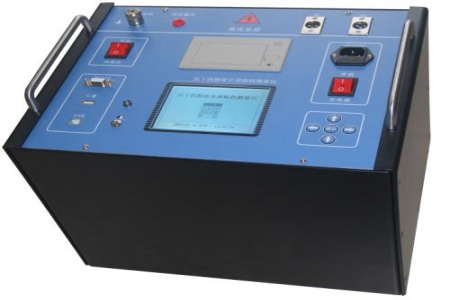
The DRD-9500 measurement range covers the common leak rate intervals of SF6 switchgear and supports multi-range switching, with each range corresponding to an independent standard curve, allowing flexible range selection on site according to the degree of leakage. The instrument can simultaneously perform quantitative detection and qualitative location: taking leak rate readings in known leak areas and assisting in locating leak points in unknown areas through response changes. The detection principle is based on a gas concentration sensing unit, and the response time and recovery time are adapted to the pace of on-site inspection; measurement can begin after warm-up following power-on. The device is equipped with a liquid crystal display interface that shows the current leak rate value and range status in real time, and the operation buttons are laid out simply for easy operation with gloves.
Compared with qualitative leak detectors, the quantitative output capability of the DRD-9500 enables maintenance personnel to record the absolute value of the leak rate, facilitating cross-cycle comparison at the same point to determine whether the leak is developing. Compared with infrared imaging equipment, this instrument provides more direct accurate readings at a single leak point and does not depend on ambient temperature differences, offering better adaptability in indoor switch rooms, cable trenches, and similar scenarios. The multi-range switching and standard curve design reduce reliance on operators' empirical judgment, and newly recruited maintenance personnel can complete the basic measurement process after brief training.
Before use, confirm that the instrument has sufficient battery power and complete zero calibration in clean air. During detection, bring the probe close to the suspected leak point and avoid direct airflow interference with readings. For outdoor equipment, measurements should be taken during periods of low wind speed, and a wind shield should be installed if necessary. After the reading stabilizes, record the value and range for subsequent re-testing and comparison. The instrument should be stored away from high-temperature and high-humidity environments, and calibration should be performed regularly according to the manual to maintain measurement consistency.

