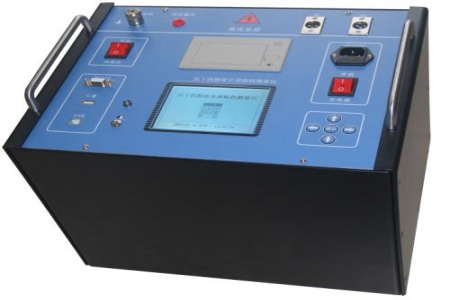
In GIS rooms, SF6 switching stations, and instrument transformer maintenance sites, leak detection work usually needs to be completed near live equipment bays. The TCD-480 quantitative gas leak detector adopts a portable suitcase structure that integrates the electronic circuit, main display screen, built-in compressed argon cylinder, and power supply/charger into one unit. Once powered on, it immediately enters the measurement state, reducing the need for on-site temporary gas source assembly and cabling. The unit's operating ambient temperature range is -5°C to +50°C, allowing it to adapt to winter and summer conditions at most outdoor substations.
Common split-type leak detection devices require separate transport of an external carrier gas cylinder, an independent main unit, and a sampling probe, resulting in more personnel trips when entering and leaving the GIS room. The TCD-480 has a built-in argon cylinder, reducing the number of external gas path connectors and correspondingly reducing gas path leak points, which has a positive effect on measurement repeatability. Compared with qualitative leak detection methods that rely solely on acoustic or electrochemical principles, this instrument uses argon as the carrier gas together with a quantitative detection circuit and outputs readable values, making it easy for maintenance personnel to record and compare with historical data rather than judging only by the loudness of sound.
The instrument's main display screen shows measurement results in real time. The electronic circuit and gas cylinder are arranged in the same case, concentrating the center of gravity during transport and making it easy for one person to carry it up and down stairs or through narrow passages. The power supply/charger supports on-site recharging, making it suitable for continuous inspection of multiple bays. During use, note the following: readings may be affected when the ambient temperature exceeds the range of -5°C to +50°C; the built-in argon cylinder should be replaced or refilled promptly according to the pressure indication; during probe sampling, a stable distance and movement speed should be maintained to avoid reading fluctuations caused by scanning too quickly. For technical engineers, these parameters determine that the instrument is suitable for use as a quantitative recording tool in planned maintenance and routine inspections.
Suitable for quantitative leak detection of SF6 gas-insulated equipment, inspection of switching stations and GIS rooms, leak point troubleshooting at instrument transformer and bushing interface locations, and also for airtightness verification after equipment installation. Technical parameters are compiled and published by Yangzhou Darui Electric Co., Ltd.

