
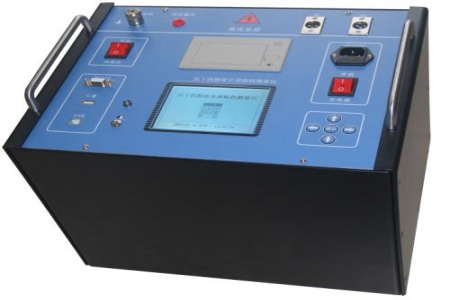
O&M personnel often face two choices when conducting on-site leak detection: one is traditional qualitative leak detectors, which can locate leak points but cannot provide concentration values; the other is laboratory chromatographic analysis, which offers high accuracy but requires a long turnaround time. Gas quantitative leak detectors fall between the two, directly reflecting the leakage rate of sealed gas chambers with ppm-level readings. Taking the DRD-9D as an example, its sensitivity is 1 ppm, its measurement range is 50-1000 ppm, it uses a solid-state semiconductor sensor, its response is instantaneous, and warm-up takes about 30 seconds. Compared with qualitative instruments, it provides recordable trend data; compared with sending samples for analysis, it enables preliminary judgment directly on site.
Several hard specifications should be examined during model selection. The first is sensitivity and range: a detection limit of 1 ppm is suitable for finding early-stage seepage, while the 50-1000 ppm range covers common leakage intervals; too high or too low is inconvenient for on-site comparison. The second is sensor type and lifespan: a solid-state semiconductor sensor has a lifespan of about 10 years and does not require frequent replacement, reducing the pressure of O&M spare parts. The third is power supply and battery life: a DC3.7V lithium battery with a capacity of 1100 mAh, charged for 6-8 hours, supports continuous operation for more than 3 hours, meeting the needs of one inspection cycle. The fourth is environmental adaptability: an operating temperature of 0~52°C and humidity of 0-95%RH (non-condensing) allow normal readings in locations such as switch rooms and GIS rooms.
From an O&M perspective, this instrument has a low operational threshold. After powering on and waiting about 30 seconds for warm-up, it enters measurement status. When the probe approaches a suspected leak point, the reading updates in real time as the concentration changes, with no obvious lag, which helps determine the direction of seepage at flanges, valves, pipeline joints, and other locations. It should be noted that readings are significantly affected by ambient ventilation; under strong convection conditions, it is recommended to use shielding or take multiple measurements to obtain a stable value. In addition, the overall weight of the instrument and the way it is held affect comfort during long inspections, so it is recommended to equip it with a lanyard or waist pouch on site.
For quantitative leak detection, different products differ in principle between infrared absorption and semiconductor sensing. Infrared technology has good selectivity for specific gases but is relatively costly; semiconductor sensors have a simple structure and fast response, respond to multiple gases, and are suitable for general surveys in mixed-gas environments. The DRD-9D uses the latter, achieving a balance between accuracy (±1 ppm) and response speed, making it suitable for routine inspections and preliminary leak judgment. If laboratory-grade arbitration data is required, it should still be combined with other analytical methods; the two are not substitutes but are used in a division of labor.
When the instrument is not used for a long time, it is recommended to charge it once every three months to avoid over-discharge of the lithium battery. Keep the sensor area away from oil contamination, dust, and corrosive gases; otherwise, its lifespan will be shortened. During measurement, try to keep the distance between the probe and the suspected leak surface consistent to facilitate horizontal comparison. After each use, record the ambient temperature, humidity, and readings to retain a basis for subsequent trend analysis. When abnormal reading drift occurs, first check whether it has been zeroed in clean air, and then determine whether it needs to be sent for repair.

