

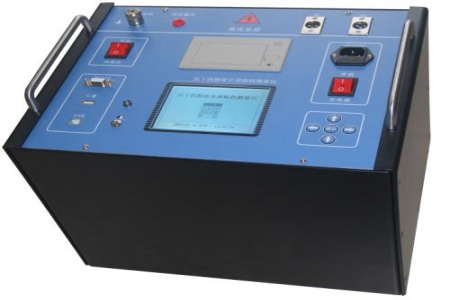
When surveying in substations or GIS rooms, design and selection personnel often need to determine whether there are微小 leaks in SF6 gas compartments. Traditional soap bubble methods or qualitative leak detectors can only find obvious leak points, making it difficult to provide annual leakage data and unable to support maintenance decisions. Gas quantitative leak detectors can provide leakage rate readings on the order of grams per year, helping to assess whether gas replenishment or maintenance is needed.
The instrument uses infrared sensing technology, with a detection range covering common leakage rate intervals of SF6 switchgear, and supports multi-range switching, each range corresponding to an independent standard curve, enabling both qualitative and quantitative leak detection simultaneously. The accuracy is 3 grams per year, the response time is instantaneous, the reset time is 1 second, and the warm-up time is about 2 seconds. The instrument is verified by a calibration line, improving the credibility and quantitative accuracy of leak detection results.
The operating temperature range is 0-52°C, adapting to most outdoor and indoor substation environments. Under normal use, the battery life is about 30 hours, meeting the needs of multiple on-site inspections. After power-on, there is no need for a long wait, and measurement can be started quickly.
1. Confirm the required leakage rate range for detection, and choose a model that covers this range and has multi-range switching function. 2. Pay attention to accuracy indicators; a resolution of 3 grams per year is suitable for determining whether gas replenishment is needed. 3. Check response and reset times; instantaneous response and 1-second reset are conducive to quickly locating leak points. 4. Evaluate battery life; 30 hours can support multi-day on-site work. 5. Understand the calibration method; instruments with standard curves and calibration lines are more convenient for data comparison.
The instrument is suitable for leak detection of SF6 switchgear, GIS combined electrical apparatus, transformers, and other equipment. Design and selection personnel can use the leakage rate data to determine whether maintenance or gas replenishment is needed, and provide reference for environmental emission statistics.

