

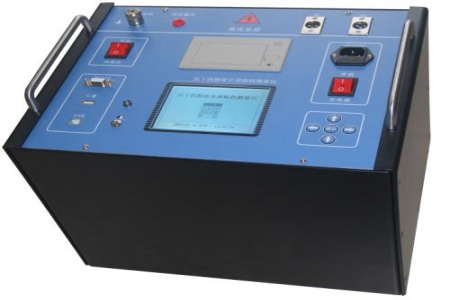
The DRD-120B Large Grounding Grid Impedance Tester adopts the variable-frequency measurement principle, in which the test current frequency deviates from the power frequency. Combined with digital filtering technology, it effectively suppresses on-site power-frequency interference. The device outputs a 5A variable-frequency test current, enabling stable impedance measurement results in grounding grid tests at substations and power plants with strong electromagnetic environments. Compared with the direct power-frequency high-current method, this solution imposes lower requirements on test power supply capacity and is suitable for on-site mobile testing.
Impedance measurement range: 0–200Ω; test current: 5A (variable frequency); output voltage: 0–500V adjustable; frequency deviation: 0.5Hz; measurement accuracy: ±(1% reading + 0.01Ω). The instrument is suitable for testing power-frequency characteristics such as power-frequency grounding impedance, contact voltage, and step voltage of various grounding devices, and can also be used for soil resistivity measurement. The output capacity of the voltage regulator meets the continuous adjustment requirements of 0–500V and 0–5A.
The conventional power-frequency high-current method requires a high-capacity voltage regulator and an isolation transformer, resulting in large equipment size and inconvenient transportation, and the test current is easily affected by grid frequency fluctuations. The DRD-120B adopts a variable-frequency low-current solution, significantly reducing the weight and volume of the entire device, so that a single person can complete on-site wiring and operation. In scenarios with large grounding grids and high soil resistivity, the variable-frequency method avoids interference frequency bands through frequency deviation, providing good data repeatability and making it suitable for review and verification of grounding parameters during the design and selection stage.
The tester is mainly used for acceptance and periodic inspection of grounding impedance of large grounding grids in power plants and substations, and can also be used for measuring grounding parameters of lightning rods, tower grounding devices, and communication base station grounding grids. The device supports contact voltage and step voltage testing, providing basic data for grounding safety assessment. During model selection, the on-site interference intensity, diagonal dimensions of the grounding grid, and test current requirements should be considered to confirm that the range and output capability match.

