

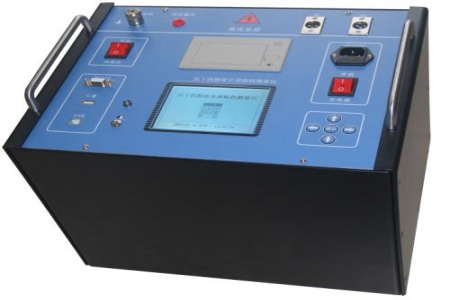
During on-site testing, connect the current wires to the slightly thicker conductors (I1, I2) on the test clamp, and the voltage wires to the slightly thinner conductors (U1, U2). Reversed connections will cause abnormal measurement results. The following explains common issues in the daily maintenance of large grounding grid testers in a Q&A format.
Of the two conductors on the test clamp, the slightly thicker one is the current wire (I1, I2), and the slightly thinner one is the voltage wire (U1, U2). Before each use, check the clamp jaws for oxidation and polish the contact surfaces with fine sandpaper; if the wire insulation is damaged or the connectors are loose, replace them promptly. When connecting the current stake and voltage stake, ensure reliable contact to avoid introducing additional resistance.
Substation grounding grids are large in area and soil conditions are complex. The traditional power-frequency high-current method requires laying long-distance current and voltage electrodes, which is highly labor-intensive for wiring, and there is power-frequency interference on site, resulting in large dispersion and poor repeatability of measurement results. This instrument uses heterodyne anti-interference technology, which can effectively suppress power-frequency interference. If dispersion still occurs, it is recommended to: check whether the layout distance of the current electrode and voltage electrode meets requirements; change the test direction and take multiple measurements for averaging; avoid periods of strong electromagnetic interference.
The instrument should be stored in a dry and ventilated place, avoiding direct sunlight. When not in use for a long time, power it on for inspection every three months. When coiling the test wires, avoid sharp bends to prevent internal wire breakage. Apply anti-rust oil to the metal parts of the current stake and voltage stake.
It can measure the grounding resistance of the current stake and voltage stake, as well as step voltage and contact voltage. When using the step voltage function, auxiliary electrodes must be arranged according to the manual to ensure personal safety.
Before testing, confirm that the grounding grid is disconnected from the equipment; during testing, it is strictly prohibited to touch the current stake or voltage stake; stop testing in thunderstorm weather. The grounding terminal of the instrument must be reliably grounded.

