
During the construction acceptance stage of grounding grids in power plants or large substations, procurement personnel need to verify whether the instrument has anti-interference capability, output capacity, and on-site applicability. The following points can serve as a reference for selection.
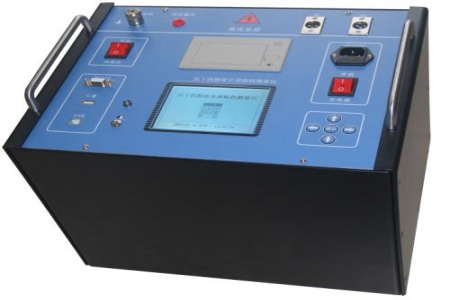
The tester has a maximum output current of 5A, a maximum output voltage of 400V, and uses a sine wave test current. The device supports automatic 45Hz/55Hz dual-frequency and multiple frequency conversion options, with an anti-power-frequency 50Hz voltage interference capability of up to 10V. In the electromagnetic environment of an operating substation, it helps improve the repeatability of grounding grid impedance measurement.
The analog channel A/D resolution is 14 bits, the effective value calculation accuracy is Class 0.5, and the measurement range covers parameters such as active power. It is suitable for measuring characteristic parameters such as grounding impedance and grounding resistance of large and medium-sized grounding grids, and can meet the completion inspection and periodic testing needs of grounding grids in power plants and substations.
The test circuit should use an isolation voltage regulator or isolation transformer; before testing, the circuit must be correctly connected according to the manual; the grounding terminal on the instrument panel must be reliably grounded nearby. When the voltage regulator has output, avoid powering off the instrument or disconnecting the test circuit to prevent overvoltage and overcurrent impacts.
Non-professionals should not disassemble the instrument panel or open the chassis to plug, unplug, or adjust internal components. The measurement wires should meet the equipment requirements to ensure reliable connection. In the harsh electromagnetic environment of an operating substation, the instrument provides accurate and stable measurement data, making it suitable for measuring characteristic parameters of large and medium-sized grounding grids.

