
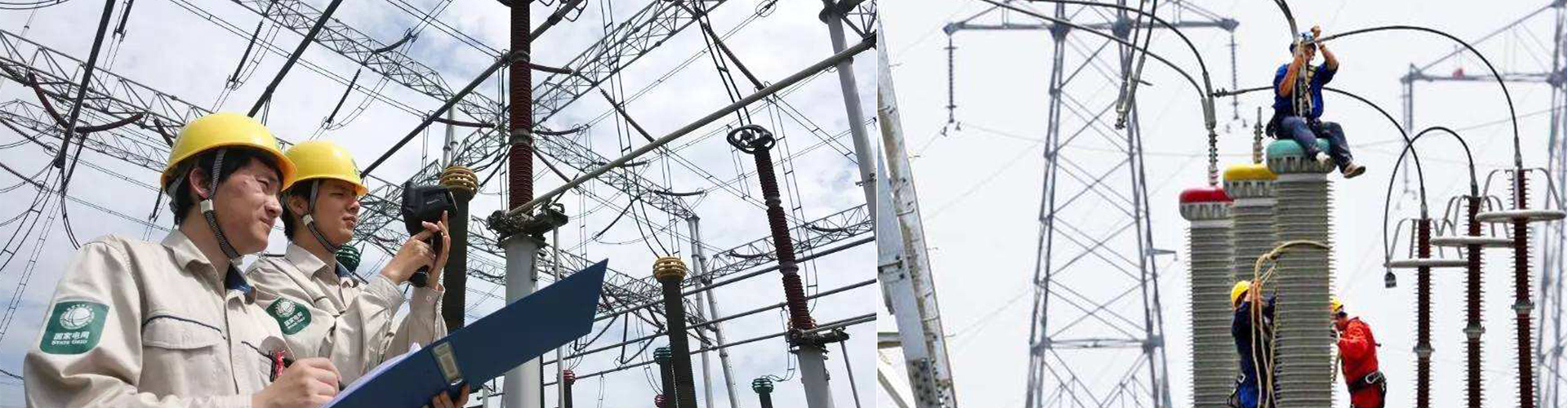
Partial Discharge (PD) refers to a phenomenon of incomplete breakdown occurring in localized areas of the insulation system of electrical equipment due to uneven electric field distribution. Although this phenomenon may not immediately lead to complete destruction of the insulation system, its long-term presence gradually weakens insulation performance and may eventually result in equipment failure. Therefore, partial discharge testing has become one of the important methods for assessing the insulation status of high-voltage and extra-high-voltage power equipment. As a professional tool, the partial discharge tester plays a crucial role in this process.
Functions and Applications of Partial Discharge Tester
Insulation Defect Detection: The partial discharge tester can detect insulation defects inside electrical equipment, such as voids and cracks, which may lead to the occurrence of partial discharge phenomena.
Condition Monitoring: Through continuous monitoring of partial discharge activities, the operating status of electrical equipment and the degree of insulation aging can be assessed, providing a basis for formulating reasonable maintenance plans.
Fault Location: Some advanced partial discharge testers have fault location functions, which can help determine the specific location of partial discharge sources, facilitating timely repair or replacement of damaged components.
Working Principle
The working principle of the partial discharge tester is mainly based on the electrical signal characteristics generated by partial discharge. The following are several common partial discharge detection methods:
Pulse Current Method: This is the most commonly used partial discharge detection method, which captures high-frequency current pulses generated during discharge through a coupler connected to the equipment under test.
Ultra-High Frequency (UHF) Detection Method: Suitable for enclosed power equipment (such as GIS), it uses UHF sensors to receive electromagnetic wave signals generated by partial discharge, offering strong anti-interference capability.
Acoustic Detection Method: This method relies on detecting acoustic signals generated during partial discharge, making it particularly suitable for rapid detection in field environments.
Application Fields
Partial discharge testers are widely used in the testing of various high-voltage power equipment, including but not limited to transformers, cables, motors, and switchgear. Their application is not limited to acceptance testing of new equipment but also covers periodic inspections and fault troubleshooting of in-service equipment.
Conclusion
With the continuous development of the power system and technological progress, partial discharge testers are particularly important for ensuring the safe and stable operation of power equipment. They not only help identify potential insulation problems but also guide the implementation of preventive maintenance work, thereby reducing outage losses and maintenance costs caused by equipment failures. For professionals engaged in the manufacturing, installation, operation, and maintenance of power equipment, mastering partial discharge testing technology is one of the key skills to ensure grid safety. In the future, with the development of intelligent detection technology, partial discharge testers will become more efficient and accurate, bringing more convenience and safety guarantees to the power industry.
Please note that the content of this article is based on general knowledge. For specific product functions and usage methods, please refer to the relevant product manuals or consult professionals.

