
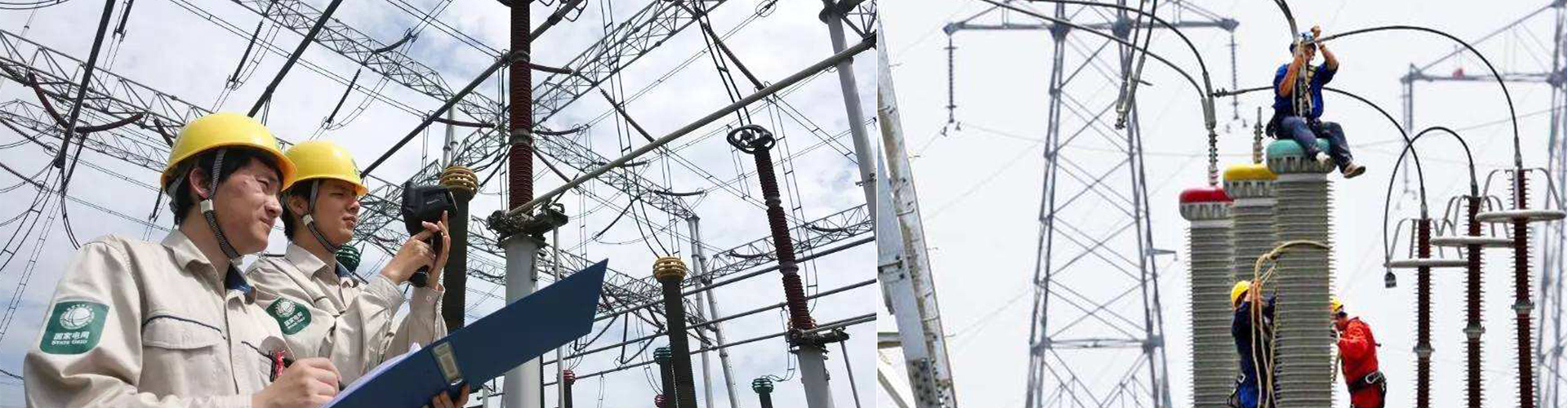
Main Functions
High Sensitivity Detection: The partial discharge tester can capture weak partial discharge signals with extremely high sensitivity, enabling early detection of potential problems.
Multiple Measurement Modes: Supports both online monitoring and offline testing. Online mode allows continuous monitoring of equipment status during normal operation, while offline mode enables more detailed diagnostic testing.
Spectral Analysis: By analyzing the spectral characteristics of partial discharge signals, the fault location can be more accurately identified and its severity assessed.
Data Recording and Report Generation: Modern partial discharge testers typically have data recording capabilities, automatically saving test results and generating detailed reports for subsequent analysis and archiving.
Application Scenarios
Power Transformers: Regular partial discharge testing of transformers is an important part of preventive maintenance, helping to extend equipment lifespan and avoid sudden failures.
High-Voltage Cables: Used to detect insulation defects in cables and their joints, ensuring the safe and stable operation of power transmission systems.
Switchgear: High-voltage switchgear, including circuit breakers and disconnectors, also requires partial discharge testing to ensure their insulation performance meets requirements.
Importance
Partial discharge not only accelerates the aging of insulating materials but can also lead to serious safety accidents such as fires or explosions. By using a partial discharge tester for regular inspections, these issues can be detected and addressed promptly, significantly reducing risks and improving the reliability and safety of power systems.
With technological advancements, the design of partial discharge testers is continuously improving. For example, advanced digital signal processing techniques and artificial intelligence algorithms are being adopted to enhance detection accuracy and efficiency. Additionally, portable designs make on-site testing more convenient and faster.
If you have any questions about the specific operation methods, application scope, or how to choose the appropriate model based on actual needs, please feel free to ask. I will do my best to provide detailed answers and support.

