
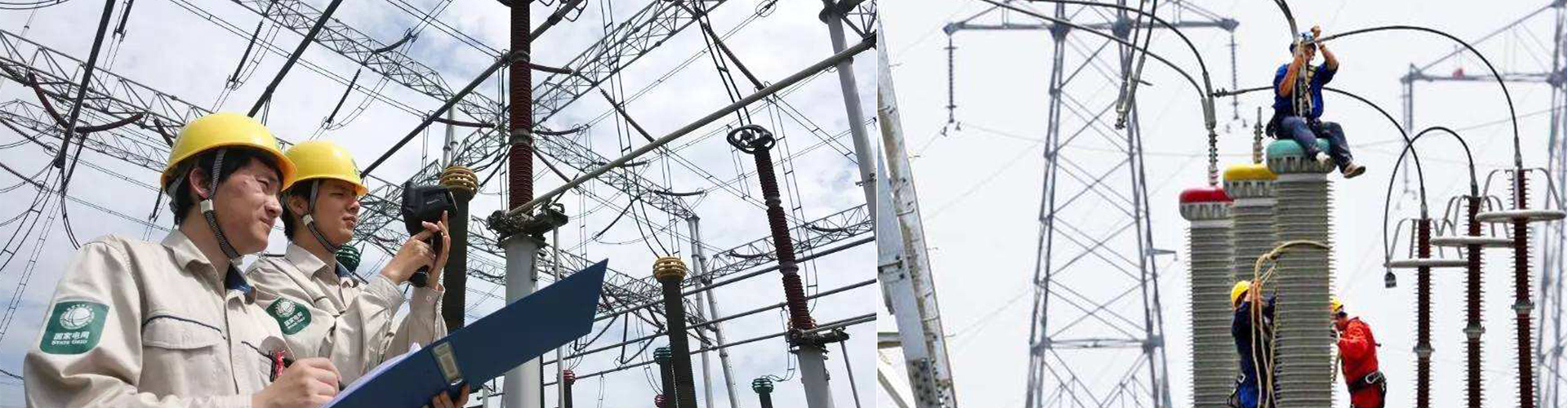
(such as transformers, cables, switchgear, etc.). Partial discharge refers to tiny arc discharge phenomena caused by defects or non-uniformity of insulating materials in electrical insulation systems. Although the energy of such discharges is small, their long-term presence can cause aging of insulating materials and ultimately lead to equipment failures. Therefore, regular partial discharge testing is crucial for ensuring the safe operation of electrical equipment. This article will provide a detailed introduction to the working principle, classification, application fields, and usage precautions of partial discharge testers.
Working Principle
The basic working principle of a partial discharge tester is to evaluate the health status of the insulation system by detecting partial discharge signals generated during the operation of electrical equipment. The main steps are as follows:
Signal Acquisition: Partial discharge signals are collected through sensors installed near the equipment under test (such as high-frequency current transformers, ultrasonic sensors, ultra-high-frequency sensors, etc.).
Signal Processing: The collected signals are processed through filtering, amplification, etc., and converted into digital signals.
Data Analysis: The built-in data processing software analyzes the collected signals to identify the location, intensity, and type of partial discharges.
Result Display: The analysis results are displayed in the form of numerical values, charts, or three-dimensional images for user viewing and recording.
Diagnosis and Recommendations: Based on the analysis results, diagnostic information about the equipment condition and maintenance recommendations are provided.
Classification
Partial Discharge Testers Based on Pulse Current Method
Detect partial discharges by measuring the pulse current flowing through the equipment's grounding wire.
Suitable for partial discharge detection in transformers, cables, and other equipment.
Partial Discharge Testers Based on Ultrasonic Method
Detect and locate partial discharges by detecting the ultrasonic signals generated by partial discharges.
Suitable for enclosed equipment such as GIS (Gas Insulated Switchgear).
Partial Discharge Testers Based on Ultra-High Frequency Method
Detect partial discharges by detecting the ultra-high frequency electromagnetic wave signals generated by partial discharges.
Suitable for partial discharge detection in high-voltage cables, transformers, and other equipment.
Portable Partial Discharge Testers
Compact design, lightweight, easy to carry and use on-site.
Suitable for field operations and temporary testing.
Online Monitoring Systems
Used for real-time monitoring of partial discharges in electrical equipment, usually installed on important equipment.
Enable remote monitoring and data recording.
Application Fields
Power Industry: Used for partial discharge detection in transformers, cables, switchgear, etc., in power systems to ensure safe operation of the power system.
Manufacturing: Used for partial discharge detection of electrical equipment within factories to ensure product quality and production safety.
Research Institutions: Used for electrical performance research and new technology development, verifying the performance of new designs.
Education and Training: Used for teaching and training in electrical engineering majors, helping students understand the principles and testing methods of partial discharges.
Laboratories: Used for performance testing and research of electrical equipment, providing precise test data.
Advantages
High Sensitivity: Uses high-sensitivity sensors and advanced signal processing technology to detect weak partial discharge signals.
Multi-functionality: Some models integrate multiple detection methods to comprehensively evaluate the partial discharge condition of electrical equipment.
Automation: Some models have automatic control systems to achieve automated testing and improve testing efficiency.
Portability: Some models are compact and easy to carry and use on-site.
Ease of Operation: User-friendly interface and simple operation, suitable for on-site use.
Data Management: Supports data recording and analysis, facilitating management and archiving.
Usage Precautions
Safety Protection: When conducting tests, always follow safety operating procedures, wear necessary protective equipment, and ensure personal safety.
Equipment Inspection: Before use, check the integrity and functionality of the partial discharge tester to ensure there is no damage or malfunction.
Correct Connection: Ensure the connection between the tester and the equipment under test is correct to avoid short circuits or open circuits.
Environmental Adaptation: Pay attention to the operating environment of the tester, avoiding adverse conditions such as high temperature and humidity that may affect test results.
Professional Training: Operators should receive professional training and be familiar with the operation methods and precautions of the tester.
Regular Calibration: To ensure the accuracy of test results, it is recommended to regularly calibrate and maintain the partial discharge tester.
Conclusion
Partial discharge testers are important tools for ensuring the safe operation of electrical equipment. Through their advanced testing technology and multiple functions, they can accurately detect and analyze partial discharge conditions in electrical equipment, promptly identify potential faults, and extend equipment life. Correctly selecting and using partial discharge testers can not only improve the safety and reliability of the system but also effectively reduce the incidence of failures and ensure the normal operation of electrical equipment. We hope this article is helpful for you to understand and use partial discharge testers.

