
When procurement personnel configure a transformer turns ratio tester for a test team, they often encounter several unavoidable questions: Do the marked parameters meet on-site requirements? Does operation depend on experience? How should measurement deviations be troubleshooted? The following summarizes common questions and corresponding answers from a practical use perspective.
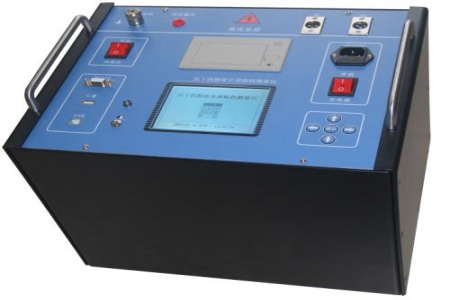
Taking the DRD-6000B as an example, it can measure the turns ratio and vector group of single-phase and three-phase transformers and instrument transformers. It is suitable for distribution transformers, power transformers, rectifier transformers, furnace transformers, and many other types. It supports common connection groups such as Y/Δ, Δ/Y, Y/Y, and Δ/Δ, and also supports blind testing, so vector group determination can still be completed when nameplate information is incomplete. In addition, this model can measure transformer no-load current, no-load loss, short-circuit voltage, and short-circuit loss, helping to assess core and winding conditions.
The turns ratio measurement accuracy is 0.2 class, meeting the reading requirements of routine handover tests and preventive tests. The turns ratio measurement range usually covers 1 to 5000, and users can select the corresponding range according to the nameplate turns ratio of the transformer under test. Vector group testing supports 1 to 12 points. During procurement, note that accuracy specifications should be interpreted under specified working conditions. On-site factors such as temperature, humidity, and power quality may affect readings, and repeated measurements can be averaged when necessary.
If measurement deviation occurs, it is recommended to troubleshoot in the following order: first check whether parameter settings are correct, including transformer type, connection group, and rated voltage; second check whether the test leads are securely connected and whether the high-voltage side and low-voltage side correspond correctly; then confirm the working status of the power board, because a faulty power board will cause abnormal output voltage and thereby affect test results. In addition, residual magnetism in the transformer under test and inconsistent tap changer positions may also cause reading fluctuations. If abnormalities remain after eliminating the above factors, contact the manufacturer for calibration or repair.
It is recommended to regularly check whether the insulation layer of the test leads is damaged, keep the instrument well ventilated, and avoid long-term storage in humid, high-temperature, or strongly electromagnetic interference environments. During procurement, consider whether it has blind testing capability, whether it supports data storage and export, and whether it comes with a calibration certificate. Choosing a model with clear technical parameters and after-sales support helps reduce later use risks.

