
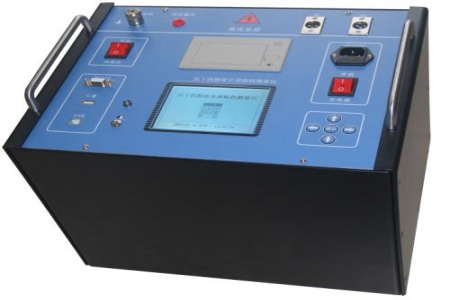
During on-site use of turns ratio testers, data deviations often occur when the power supply voltage exceeds the allowable range. The DRD-BC fully automatic transformer turns ratio and vector group tester requires an input voltage of AC 220V±10%. If the voltage is too high or too low, the internal reference circuit may not work properly, directly affecting the accuracy of turns ratio calculation. O&M personnel should confirm the power supply voltage with a multimeter before each measurement, and install a voltage stabilizer if necessary.
Poor contact of test leads or incorrect clamping positions are the main causes of the "measurement result out of tolerance" alarm. Solution: first turn off the instrument power, check whether the high-voltage side and low-voltage side test leads are correctly matched, and re-clamp the terminals to ensure contact resistance is less than 0.1Ω. If the problem persists, use a multimeter to check the continuity of the test leads to rule out broken wires or oxidation.
The instrument has a turns ratio measurement range of 1–5000 and an accuracy class of 0.2, covering common equipment such as distribution transformers, electric furnace transformers, and rectifier transformers. Vector group testing supports 12 connection modes including Y/Δ, Y/Y, and Δ/Y, with no manual switching required. After a measurement is completed, the test voltage is automatically cut off to avoid heat accumulation in the windings caused by prolonged voltage application.
It is recommended to clean the instrument's cooling fan filter every quarter to prevent dust blockage from causing internal overheating. Check monthly whether the insulation layer of the test leads is damaged and whether the alligator clips are oxidized or loose. For long-term storage, place the instrument in a dry and ventilated place with ambient humidity not exceeding 80%, and power it on for 30 minutes every six months to drive out internal moisture.
The DRD-BC is suitable for turns ratio and vector group verification of transformers rated 35kV and below, and is commonly used in substation maintenance, distribution room acceptance, and transformer factory tests. During operation, first set the rated turns ratio and connection group, then connect the test leads, avoiding live plugging and unplugging. For on-load tap-changing transformers, measure and record data tap by tap to facilitate comparative analysis.

