
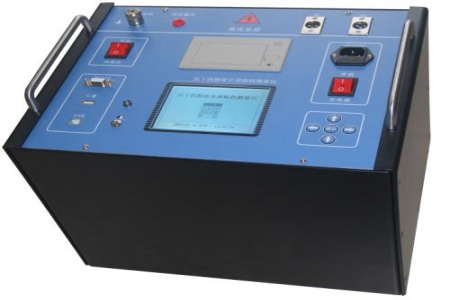
A common design concern is matching the test current to the measurement range. Compared with similar solutions using fixed current output, the DCR-200B DC resistance tester adopts programmable current source technology and can automatically match the test current within the 1 μΩ to 20 kΩ range without manual range switching. For objects with different resistance values such as transformer windings and switch contact resistance, the device can automatically adjust the output current according to the load, reducing measurement deviation caused by improper current selection. It is suitable for design and selection scenarios that need to cover multiple types of test specimens.
Industrial sites have electromagnetic interference and power-frequency crosstalk, and some similar devices require multiple measurements and averaging to obtain stable values. The DCR-200B is built around a high-speed microcontroller and is equipped with a high-speed A/D converter. It features interference-resistant design, with repeatability controlled within 0.2%. In complex electromagnetic environments such as distribution rooms and substations, a stable reading can be obtained with a single measurement, reducing repeated testing time.
Compared with models suitable only for indoor environments, this instrument has an operating temperature range of -10℃ to 50℃, covering outdoor maintenance in northern winters and high-temperature conditions in distribution rooms in summer. During storage, it is recommended to keep the environment dry and avoid condensation. If not used for a long time, it should be powered on periodically for inspection. The device has comprehensive protection functions, including overcurrent, overvoltage, and reverse connection protection, reducing the risk of misoperation.
Measurement range 1 μΩ to 20 kΩ, accuracy ±(0.2%+2 digits), resolution 0.1 μΩ, powered by AC 220V or an optional built-in lithium battery. It is suitable for scenarios such as transformer DC resistance measurement, switch contact resistance detection, busbar joint resistance testing, and cable conductor resistance measurement. Compared with solutions that require an external shunt or manual range switching, this device has higher integration and is suitable as one of the alternative solutions for loop resistance measurement during the design and selection stage.

