

When purchasing a loop resistance tester, if the output current capability is insufficient, on-site testing may fail to reach the test current required by standards, causing measurement data to deviate from the true value. For example, DL/T 845.4—2018 stipulates that the loop resistance measurement current should not be lower than 100A, while some instruments with 10A or 20A specifications may, when measuring the contact resistance of high-voltage switches, be unable to effectively break down the oxide film due to insufficient current, affecting judgment. Therefore, procurement personnel need to confirm the instrument's output current range according to the type of equipment being tested.
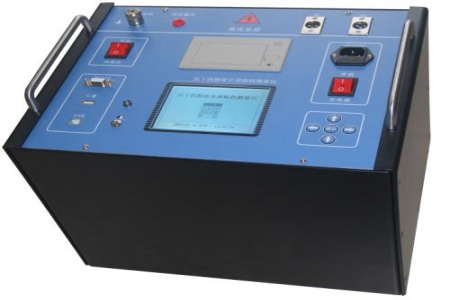
The ZDR-30C DC Resistance Tester adopts automatic programmable current source technology. The current source has a total of 1000 current levels, automatically controlled by an internal microcontroller according to the measured resistance, enabling switching of measurement states over a wide range without manual gear shifting. This design reduces the complexity of on-site training after procurement and also lowers the risk of human error. The instrument's output current capability is higher than common 10A and 20A specifications, making it suitable for loop resistance measurement of equipment such as circuit breakers and disconnectors.
To maintain measurement accuracy and repeatability, it is recommended to regularly check the cleanliness and tightness of the test line clamps to avoid oxide layers affecting contact resistance. The instrument should be stored in a dry and ventilated environment, and if not used for a long time, it should be powered on once every three months. When measuring inductive loads, read the data after the current stabilizes, and ensure discharge is complete before removing the connections. If abnormal data fluctuations are found, first check whether the current level is automatically matched properly, and then check the connection status of the test lines.
The ZDR-30C features a compact size, rapid measurement, and good data repeatability, making it suitable for users who need to balance on-site portability with current output capability. During procurement, it is recommended to check the rated current of the equipment being tested and the test current required by standards to confirm that the instrument's range covers actual needs. At the same time, attention can be paid to whether it has functions such as automatic discharge and overload protection to improve safety in use.

