
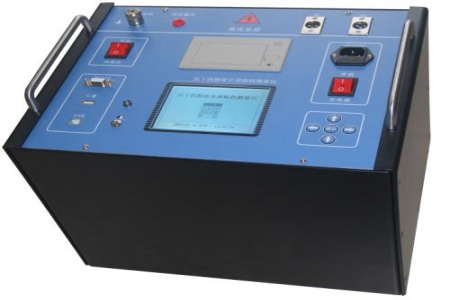
Design and selection personnel often encounter a problem on site: suspected leaks at SF6 gas compartments or pipeline flanges cannot be judged by the naked eye, and the soap bubble method is inefficient and difficult to quantify. The KDQ-300 quantitative gas leak detector uses a solid-state semiconductor sensor. When the probe approaches a suspected leak area, the instrument responds instantaneously, helping inspection personnel narrow down the troubleshooting scope. The detection range covers from 0–30 μL/L to the 1000 ppm level, with a sensitivity of 1 ppm, making it suitable for preliminary screening while equipment is in operation.
For design and selection, two indicators need attention: first, how small a leak the instrument can detect; second, whether the range covers the interval from minor seepage to obvious leakage. The KDQ-300 has a sensitivity of 1 ppm and a measuring range of 50–1000 ppm. The warm-up time is about 30 seconds, allowing it to enter the detection state relatively quickly after power-on. The probe length is 35.5 cm, making it convenient to operate in narrow locations such as inside switchgear and at flange connections. It should be noted that the instrument output is a relative concentration reference value, used to judge leakage trends and approximate locations, and is not directly equivalent to annual leakage rate measurement results.
On-site inspections often require continuous movement across multiple bays. The built-in battery of the KDQ-300 supports about four hours of continuous operation, meeting the inspection duration requirements of general switch rooms or voltage regulating stations. The operating ambient temperature is 0–52°C, covering the operating environments of most indoor power equipment. The instrument uses a solid-state semiconductor sensor and has some cross-response to common interfering gases in the environment. It is recommended to first zero-calibrate in a clean air background and then approach the target area for detection to reduce misjudgment.
In addition to sensitivity and range, it is recommended to confirm whether the probe length makes it easy to reach the parts to be inspected, whether the instrument has audible/visual or numerical alarm methods, and whether zero calibration is simple to perform. The probe and main unit of the KDQ-300 are designed separately, allowing the probe to extend deep into the cabinet, with alarms fed back in real time as concentration changes. For scenarios requiring recording of detection data, an external recording device can be used. Specific technical parameters are subject to the accompanying technical documents. During selection, a comprehensive evaluation should be made based on the volume of the equipment to be inspected, possible leak paths, and inspection frequency.

