
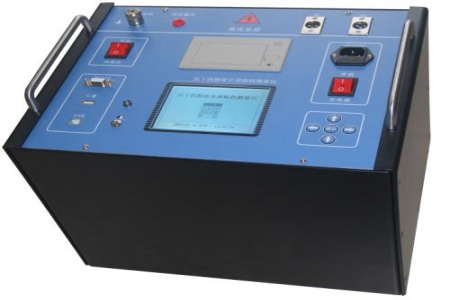
During inspections at natural gas pressure regulating stations or SF6 switchgear rooms, it is often necessary to determine the leak location and approximate leak rate without power interruption or equipment disassembly. The TCL-500 quantitative gas leak detector is designed for such on-site needs. The following Q&A explains its engineering parameters and selection points.
The TCL-500 has adjustable sensitivity, with a minimum detection limit of 1 ppm (for SF6 gas), and a measurement range covering 1–1000 ppm, covering the common interval from tiny seepage to obvious leakage. The panel is equipped with leak level indicator lights, allowing inspectors to judge the severity of a leak point without looking at numerical values. For procurement personnel, if daily inspection targets are mainly SF6 switches and GIS gas compartments, choosing 1 ppm sensitivity can meet routine leak detection; if natural gas pipelines are also involved, it is necessary to confirm the sensor's cross-response capability to combustible gases.
The instrument uses a solid-state semiconductor sensor and responds to SF6 and various combustible gases. After startup, it preheats for about 30 seconds before entering working condition, and the response is instantaneous—after the probe contacts the leak point, the reading changes quickly without long waiting. This feature is practical during multi-point inspections: single-point confirmation time is short, and with the handheld unit, continuous operation time can be extended. The main unit weighs about 1.6 kg, and the handheld unit weighs about 0.4 kg, making it suitable for one-handed operation at heights or in narrow spaces.
It is recommended to check the following items: detection principle (solid-state semiconductor), minimum detection limit (1 ppm), range (1–1000 ppm), response time (instantaneous), warm-up time (about 30 seconds), probe hose length (50 mm specification depending on configuration), power supply method and battery life. If used in environments with combustible gases such as natural gas pipelines and LPG filling stations, the instrument's detection capability for methane and liquefied petroleum gas should be confirmed, and products with corresponding protection ratings should be selected according to the on-site hazardous area classification.
Suitable for occasions requiring gas leak location such as SF6 electrical equipment, natural gas pipelines, and LPG filling stations. During use, note the following: in high-concentration leak environments, ventilate first before detection to avoid sensor saturation; strong electromagnetic fields or high-humidity environments may affect reading stability, and regular calibration according to the manual is recommended. The above parameters are from product technical data, and the specific configuration is subject to the order agreement.

