
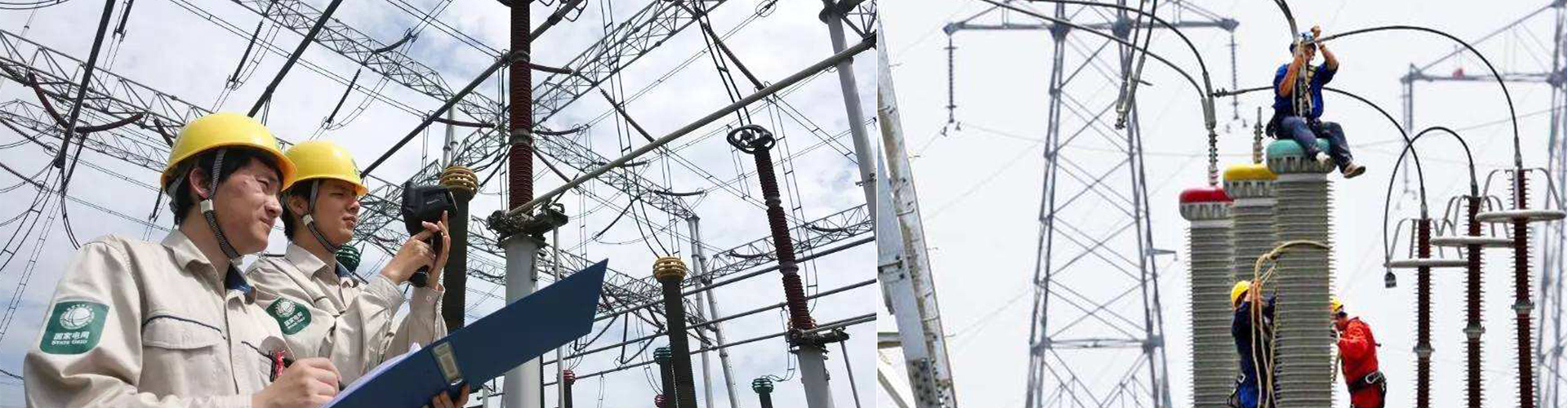
Equipment in power systems, such as generators, transformers, and cables, may experience partial discharge phenomena during operation, which not only affects the service life of the equipment but can also lead to serious safety accidents. As an instrument specifically designed for detecting and analyzing partial discharge phenomena, the partial discharge tester is of great significance for ensuring the safe operation of power systems.
II. Partial Discharge and Its Hazards
Partial Discharge (PD) refers to the localized ionization phenomenon occurring in insulating media, typically in the insulation materials of high-voltage equipment, especially in areas with defects or stress concentration. Partial discharge can cause aging of insulation materials, reduce the service life of equipment, and in severe cases, may trigger equipment failures, resulting in economic losses or even safety accidents.
III. Functions and Roles of Partial Discharge Testers
Partial discharge testers are mainly used to detect whether partial discharge phenomena exist in power equipment and to analyze the characteristics of the discharge. Its main functions include:
Detection and Location: By capturing partial discharge signals, determine whether partial discharge exists in the equipment and locate the discharge position.
Quantitative Analysis: Measure parameters such as discharge intensity and frequency to assess the degree of discharge.
Trend Monitoring: Long-term monitoring of partial discharge conditions in equipment, analyzing change trends, and predicting equipment health.
Fault Diagnosis: By analyzing partial discharge patterns, help diagnose potential defects or faults in equipment.
IV. Application Scenarios of Partial Discharge Testers
Partial discharge testers are widely used in various aspects of power systems, including but not limited to:
Acceptance and Acceptance Testing of Power Equipment: Conduct partial discharge tests after installation of new equipment to ensure compliance with quality standards.
Online Monitoring and Periodic Testing: Conduct periodic testing of operating power equipment to promptly detect potential partial discharge issues.
Fault Troubleshooting and Diagnosis: When abnormal conditions occur in equipment, use partial discharge testers for in-depth testing to identify the cause of faults.
Scientific Research and Teaching: Used in scientific research experiments and educational activities to help students and researchers understand partial discharge phenomena and their effects.
V. Operation and Use of Partial Discharge Testers
When using a partial discharge tester, the following steps should be followed:
Preparation Phase: Ensure the tester and related accessories are intact and correctly connected.
Parameter Setting: Set appropriate test parameters based on the characteristics of the test object, such as frequency range and sensitivity.
Data Acquisition: Start the tester to begin collecting partial discharge signals.
Data Analysis: Use built-in or external software to analyze the collected data and identify discharge patterns.
Result Interpretation: Based on the analysis results, assess equipment condition and provide corresponding maintenance recommendations.
VI. Selection and Maintenance Recommendations
When selecting a partial discharge tester, the following factors should be considered:
Accuracy and Reliability: Ensure the tester has high measurement accuracy and reliability.
Functional Diversity: Choose a multifunctional tester that can meet various testing needs.
Ease of Use: Choose equipment with a user-friendly interface that is easy to learn and use.
Technical Support: Choose brands that provide good after-sales service and technical support.
VII. Future Prospects
With advancements in sensing technology, wireless communication technology, and big data analysis, future partial discharge testers will become more intelligent and portable. For example:
Intelligent Diagnosis: Combine machine learning algorithms to automatically identify partial discharge patterns, improving the accuracy of fault diagnosis.
Remote Monitoring: Achieve real-time remote monitoring through wireless networks, facilitating remote fault troubleshooting.
Integrated Platform: Integrate partial discharge testing with other power equipment detection functions on a single platform, simplifying operational processes.
By properly using partial discharge testers, power enterprises can effectively improve the efficiency of equipment detection, promptly identify potential problems, and thus better ensure the safe and stable operation of power systems, providing users with high-quality power services.

