

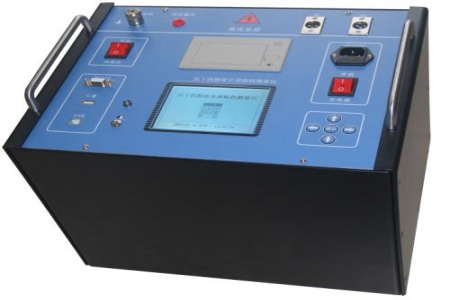
When purchasing a transformer oil chromatography online monitoring device, people often directly compare its price with that of a laboratory chromatograph. The positioning of the two differs significantly: laboratory chromatographs focus on single-analysis accuracy and rely on manual sampling, transportation, degassing, injection, and other steps; online monitoring devices focus on continuous trend tracking and need to operate stably over the long term under unattended conditions. The DRD-7200 is designed for substation sites and integrates oil-gas separation, gas detection, and remote data transmission. During procurement, attention should be paid to long-term reliability, maintenance cycles, and communication compatibility, rather than simply comparing the cost of a single measurement.
The device adopts the principle of gas chromatography and can monitor characteristic gases dissolved in transformer oil, such as hydrogen, methane, acetylene, ethylene, ethane, carbon monoxide, and carbon dioxide. The detection cycle can be set to as short as once every 2 hours, and can also be adjusted according to load conditions. The working power supply is AC 220V±10%, 50Hz. The master station unit is an indoor installation component with protection rating IP51; the outdoor installation components and the communication control unit have protection rating IP56, adapting to outdoor environments. The storage and transportation extreme ambient temperature is -40℃ to +80℃. The device's shock resistance is 10G peak-to-peak acceleration (11ms), and it can withstand vibration during transportation and installation. Under standard atmospheric conditions, a standard lightning impulse voltage is applied between the power and signal ports and the enclosure, meeting the electromagnetic compatibility requirements of substations. The external dimensions are 600mm wide, making it easy to arrange in cabinets.
The single cost of laboratory chromatographic analysis may appear low, but it must include comprehensive costs such as sampling labor, vehicle transportation, degassing consumables, instrument calibration, and data organization, and it is difficult to capture sudden changes in gas production rate. The initial investment in an online monitoring device is relatively high, but it can automatically collect data at a 2-hour or 4-hour cycle, reducing manual travel, and can provide timely warnings for sudden changes in gas production rate. Procurement personnel should calculate the total cost of ownership over a 3- to 5-year period and make a comprehensive judgment based on the number of transformers, geographical location, and operation and maintenance staffing.
The DRD-7200 is suitable for oil-immersed transformers, reactors, and converter transformers at voltage levels of 110kV and above, and is especially suitable for equipment located in remote areas, unattended stations, or important load nodes. During procurement, it can be confirmed whether the communication interface supports IEC 61850 or Modbus protocols so as to connect to the station monitoring system. If there are no stable communication conditions on site, local data storage and export functions can be considered. For units that already have laboratory analysis capabilities, online monitoring can be used as a supplementary means for routine inspections, and sampling verification can be arranged according to alarm thresholds.
After the equipment arrives, the model and quantity of the main unit, outdoor unit, oil circuit connectors, and communication cables should be checked, and the appearance should be inspected for transportation damage. During installation, pay attention to the sealing of the oil circuit interface to avoid air infiltration affecting measurement results. For initial commissioning, standard gas calibration is recommended to confirm that the retention time and response values of each component meet factory specifications. Routine maintenance mainly includes regular checks of carrier gas pressure, replacement of consumables, and calibration verification. The specific cycle can refer to the manual and be adjusted in combination with the on-site operating environment.

