

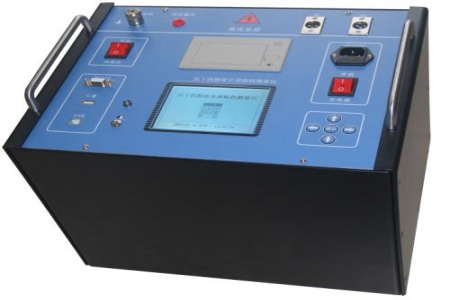
When a transformer is taken out of service for maintenance, operation and maintenance personnel need to determine whether the switching process of the on-load tap changer is normal. Traditional methods often rely on experience or indirect judgment, making it difficult to capture the details of the transition process. The DRD-3000 On-Load Tap Changer Tester directly measures the transition waveform, transition time, transition resistance, and three-phase simultaneity, helping operation and maintenance personnel locate the specific link of switching abnormalities.
When inspecting tap changers on site, several types of situations are often encountered: abnormal arcing during the switching process, transition resistance deviating from the standard value, and three-phase operation not being synchronized. If these problems rely only on transformation ratio or DC resistance data in electrical tests, it is difficult to locate them directly. The DRD-3000 adopts computer control and, through a specially designed measurement circuit, records the waveform changes of the entire switching process in real time. Operation and maintenance personnel can read the transition time, transition resistance value, and three-phase simultaneity difference from the waveform, thereby determining specific causes such as contact wear, resistor sheet degradation, or mechanism jamming.
According to on-site conditions, the DRD-3000 supports two measurement wiring methods. When the tap changer leads can be directly contacted, measurement is performed by wiring directly from the leads, reducing interference from intermediate links. When the tap changer leads are not easily accessible, measurement can be performed by wiring from the transformer's three-phase bushings and neutral point, adapting to most transformer maintenance scenarios. Both methods can complete the measurement of transition waveform, transition time, transition resistance, and three-phase simultaneity.
The transition time measurement range covers the switching time interval of conventional on-load tap changers; the transition resistance measurement range meets the detection needs of common resistive tap changers. The instrument weighs about 4.5 kg, making it easy to carry and move on site. The measurement process is controlled by a computer, and data can be stored and replayed, making it convenient for operation and maintenance personnel to compare historical data and judge the trend of tap changer status changes.
The DRD-3000 is suitable for transformer maintenance sites, regular inspection of on-load tap changers, and troubleshooting. When using it, it is recommended to first confirm that the tap changer is in a de-energized state, select lead or bushing wiring according to the wiring method, and ensure reliable grounding. After measurement, compare the waveform and parameters with factory data, and further analyze abnormal waveforms. The instrument has a simple operation interface, and on-site operation and maintenance personnel can independently complete the measurement after brief training.

