

The power industry standard DL/T 596 "Preventive Control Regulations for Power Equipment" has clear testing requirements for the vacuum degree of vacuum switch interrupter chambers: when the vacuum degree drops to a value that does not meet the specified requirements, the interrupter chamber should be replaced. For vacuum switches of 10kV to 35kV voltage levels, the vacuum degree of the interrupter chamber is directly related to the breaking capacity and insulation performance. When configuring testing equipment, design and selection personnel need to pay attention to whether the tester can cover the vacuum degree range and accuracy requirements specified in the standard, so as to meet various scenarios such as installation acceptance, routine maintenance, and troubleshooting.
The vacuum degree of a vacuum switch interrupter chamber cannot be directly judged by a conventional multimeter or megohmmeter. Deterioration of the vacuum degree inside the interrupter chamber is often concealed and difficult to find through visual inspection. Traditional testing methods rely on disassembly after power outage or the use of indirect methods, which are cumbersome to operate and have a significant impact on production and operation. In addition, factors such as electromagnetic interference and changes in ambient temperature and humidity on site place requirements on the anti-interference capability and stability of the testing equipment. If the measuring range of the testing equipment is insufficient or its resolution is limited, early defects of vacuum degree decline may be missed.
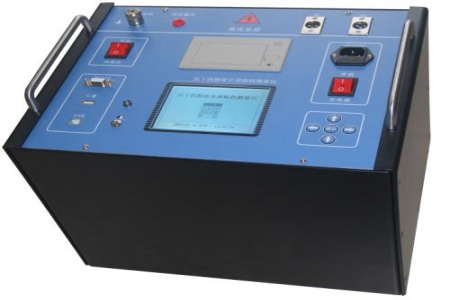
The SDV-860 Switch Vacuum Degree Tester adopts the principle of the magnetron discharge method, applying a pulsed magnetic field and a high-voltage electric field across the interrupter chamber, and indirectly reflects the vacuum degree by measuring the ion current. The measurement range of the instrument covers 1×10⁻⁵ Pa to 1×10⁻¹ Pa, and the detection range is 10⁻⁵ to 10⁻¹ Pa, which can meet the testing needs of interrupter chambers of 10kV to 35kV vacuum switches. The instrument has built-in high-voltage output and signal acquisition circuits, and the testing process is automated, reducing manual intervention. In response to on-site electromagnetic interference, the equipment adopts corresponding measures in circuit design and shielding to improve reading stability.
During selection, it is recommended to pay attention to the following technical parameters: the measurement range should cover the lower limit of the vacuum degree allowed for the interrupter chamber; the detection range needs to match the standard requirements; the stability of the high-voltage output affects test repeatability; and whether the equipment has anti-interference design and portability. The SDV-860 has a moderate overall weight, is easy to carry on site, has a simple operation interface, and can store test data. Its output high voltage and pulsed magnetic field parameters are within safety limits and meet on-site operation safety requirements.
The tester is suitable for installation acceptance, routine maintenance, and troubleshooting of 10kV to 35kV vacuum switches. During the installation acceptance stage, the vacuum degree of the interrupter chamber can be sampled and tested to confirm that the product meets factory standards; during routine maintenance, regular testing can establish the trend of vacuum degree changes to assist in judging the service life of the interrupter chamber; in troubleshooting, abnormal vacuum degree can be quickly screened to locate the cause of the fault. After the interrupter chamber is replaced, the instrument can be used to verify the replacement quality and ensure the safe commissioning of the equipment.

