

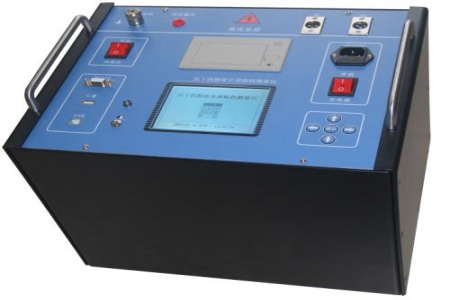
When comparing different options, procurement personnel often focus on the initial price and nominal parameters, while the hidden costs of maintenance are easily overlooked. During long-term use of a DC resistance tester, maintenance matters include current source stability, tap switching wear, heat dissipation design, and calibration cycles. If the instrument has a limited number of current ranges, measuring test objects with different resistance values requires frequent manual range switching, which may increase contact wear and the probability of operational errors. Therefore, evaluating from the perspective of maintenance and precautions helps in selecting equipment with a more reasonable full-lifecycle cost.
Some traditional loop resistance testers use fixed or few current ranges. When measuring different objects such as transformer windings and circuit breaker contact resistance, operators need to manually select the current based on experience and record data multiple times. The DRD-100A DC resistance tester adopts automatic program-controlled current source technology, with 2000 current ranges set internally. In automatic mode, the internal microcontroller automatically controls the output current according to the measured resistance, without the need for repeated manual range switching. In procurement evaluation, this design can reduce dependence on operator experience while also reducing repeated measurements caused by improper range selection, indirectly lowering maintenance workload.
Procurement personnel can ask suppliers about the instrument's heat dissipation method and continuous output capability. The central control unit of the DRD-100A controls the constant current source to apply a constant, high-precision current to the external load under test, then collects the test voltage and current test current, and obtains the actual resistance value after processing. Daily maintenance requires keeping ventilation openings clean and avoiding long-term storage in high-temperature or humid environments. If the instrument has not been used for a long time, it is recommended to power it on regularly to check whether the current output is normal, and send it for inspection according to the calibration cycle to maintain measurement accuracy.
Compared with similar solutions that require an external voltage regulator or manual range switching, this instrument can automatically adjust the current according to the measured resistance in automatic mode, reducing the number of on-site wiring changes. During use, ensure that the test clips are in good contact with the terminals under test to avoid introducing additional errors due to contact resistance. After testing is completed, wait until the current output is completely turned off before removing the test leads. The instrument has a net weight of 3.3 kg, making it easy to carry to maintenance sites such as switchgear cabinets and transformers. During procurement, the number of ranges, automatic control capability, weight, and calibration service can be used as horizontal comparison items, and a choice can be made in combination with one's own maintenance conditions.

